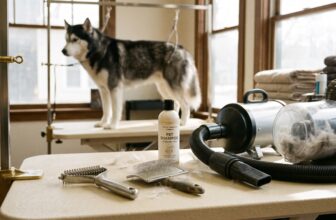
Siberian Husky
The endurance sled dog of the Chukchi peopleCanis lupus familiaris
The Siberian Husky is a medium (10–25 kg) breed, originating in Siberia (Russia), standing 53–60 cm (males), 50–56 cm (females), weighing 20–27 kg (males), 16–23 kg (females), with a double coat coat, and a lifespan of 12–14 years. Reviewed against institutional breed standards and veterinary dermatology benchmarks by the PGA Editorial Board.
- Origin
- Siberia (Russia)
- Mass Range
- 20–27 kg (males), 16–23 kg (females)
- Height Range
- 53–60 cm (males), 50–56 cm (females)
- Longevity
- 12–14 years
- Coat
- Double Coat
- Size Tier
- Medium (10–25 kg)
The Siberian Husky was developed by the Chukchi people of northeastern Siberia as an endurance sled dog capable of pulling light loads over vast distances at moderate speed. Their dense double coat, compact build, and efficient metabolism allowed them to run all day without tiring. The famous 1925 serum run to Nome cemented their place in American history.
Quantitative Behavioural & Care Telemetry
Indexed scores derived from breed-standard descriptors. Each gauge carries its numeric value and qualitative band for direct comparison.
Heritage & Evolutionary Lineage
The Siberian Husky lineage is documented from archaeozoological, genomic, and registry records, distinguishing older landrace origins from modern standardisation.
- Origin Country
- Siberia (Russia)
- Specific Region
- Northeastern Siberia
- Registry Overlay Period
- Ancient; modern type 1900s
- Pre-Registry Utility
- Endurance sled dog for transport and racing
- Current Function
- Companion, sled dog, show
- Registry Classification
- Working
- International Group
- Group 5: Spitz
- Registry Status
- AKC Recognized
The double coat is a marvel of Arctic engineering — dense undercoat for insulation, guard hairs that repel snow and moisture. NEVER shave a Husky; the coat provides both winter insulation and summer heat protection. Their seasonal 'blowout' sheds the entire undercoat over 2–4 weeks.
Physical Phenotype Specification
Biometric traits and coat architecture compiled from institutional breed standards. Compound ranges are declared as structured min/max values in the page graph.
- Size Tier
- Medium (10–25 kg)
- Weight Range
- 20–27 kg (males), 16–23 kg (females)
- Height Range
- 53–60 cm (males), 50–56 cm (females)
- Lifespan Expectancy
- 12–14 years
- Coat Architecture
- Double Coat
- Coat Length
- Medium (1–3 in)
- Accepted Colors
- All colors from black to white; various markings
- Temperament
- Friendly, outgoing, mischievous, high prey drive
Environmental & Household Compatibility
Household dynamics, multi-species tolerance, and spatial adaptability. Ratings describe breed-level tendencies, not individual guarantees.
- Children Compatibility
- Yes
- Canine Compatibility
- Yes
- Feline Compatibility
- No
- Apartment Suitability
- No
- Thermal Tolerance
- Cold-tolerant; heat-sensitive
- Vocalization
- Vocal
- Spatial Requirements
- House with securely fenced yard required (escape artists)
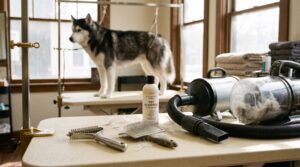
Grooming Protocol & Tool Geometry
Maintenance intervals, surfactant chemistry boundaries, and the precise tool geometry required to preserve coat integrity and skin health.
- Brushing Interval
- 2–3 times weekly; daily during seasonal blowout (2–4 weeks)
- Bathing Interval
- Every 2–3 months
- Salon Maintenance
- Every 8–10 weeks for deshedding
- Thermal Boundary
- Max 105°F, 8in standoff; never shave
- Surfactant pH
- 6.5–7.0
Health, Dermatological & Clinical Risk
Documented genetic conditions, dermatological vulnerabilities, and preventive screening protocols compiled for veterinary review.
Common Conditions
- Hip dysplasia
- Eye conditions (cataracts, PRA)
- Zinc-responsive dermatosis
- Hypothyroidism
Recommended Screenings
- OFA hips, eyes
- Cardiac exam
Huskies are escape artists. Fences must be 6+ feet tall and buried 12 inches deep. They will dig under or jump over standard fencing.
Featured Siberian Husky Guides
Recent editorial guides for this breed, each following the PGA institutional review standard.
Reference navigation
Further monographs and the species index. Every destination carries its own editorial review state.