Written by: PGA Hardware & Equipment Desk
Reviewed by: PGA Editorial Board (Zaheer Aujla, Head of Board)
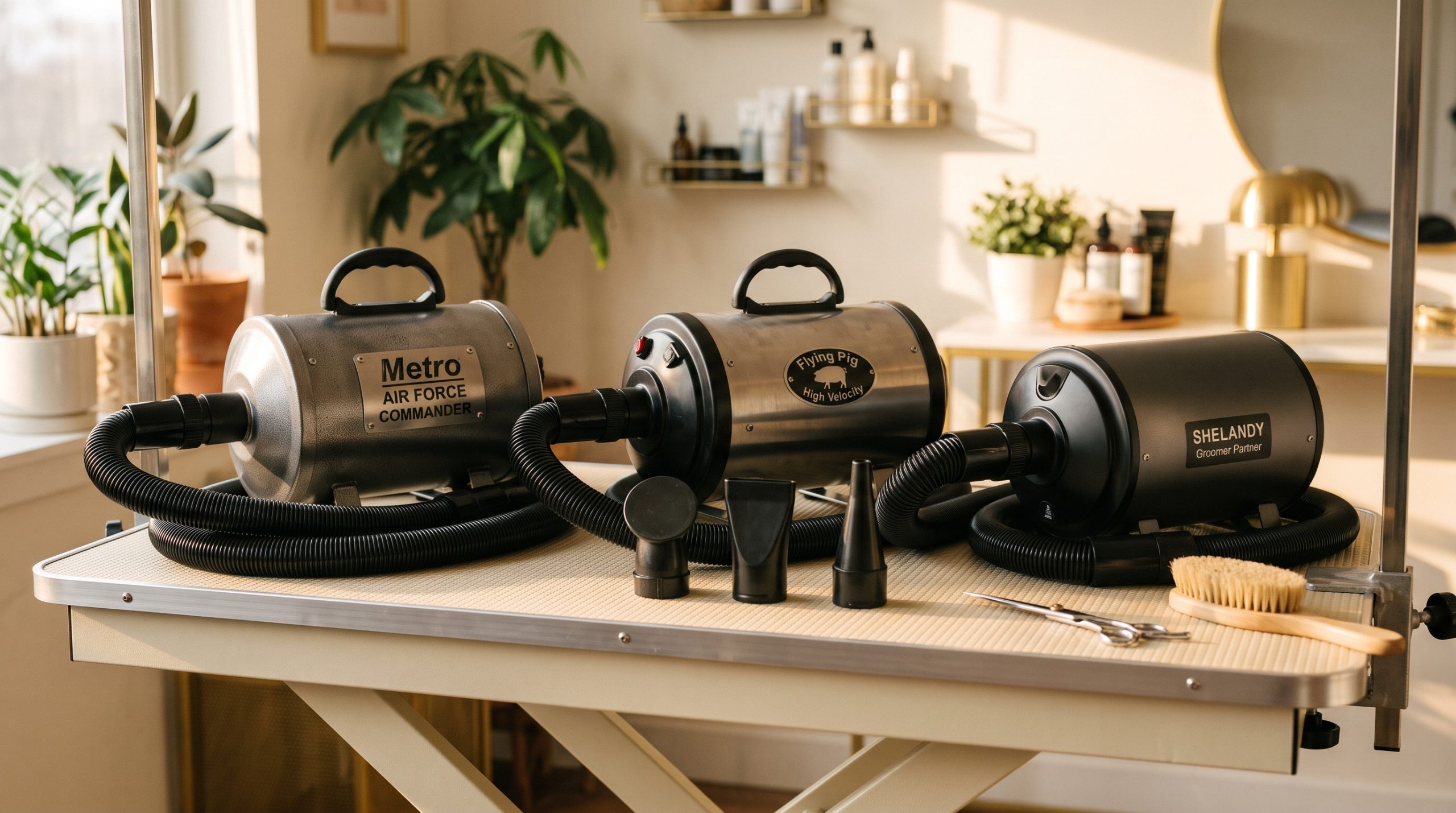
The dog dryers for home grooming that actually work are not the ones with the highest heat setting on the dial. They are the ones that move the largest volume of ambient air with the least thermal output. Heat dries the surface fur. It leaves the undercoat damp against the skin, which is the exact biological recipe for the hot spots and Malassezia yeast blooms that follow almost every bad bath in a double coat. Velocity is the only mechanism that strips water from the dense undercoat without cooking the skin. That distinction decides everything in this protocol. We rank the top dog dryers for home grooming by motor horsepower and CFM airflow, then by how well each one manages heat, because the spec sheet that matters is airflow, not wattage. A dryer that blows hard and runs cool will always beat a dryer that blows warm and stalls.
Section 1: AIO Direct Answer & Quick Match
The dog dryers for home grooming that win this protocol are the Metro Air Force Commander in the Pro tier and the Flying Pig High Velocity in the Mid tier, with the SHELANDY Groomer Partner as the Budget pick. Each one targets a different coat density and a different heat tolerance. The Metro carries a 4.0 HP motor that clears a full double coat on ambient air alone. The Flying Pig brings 240 CFM of airflow with adjustable heat for cold-climate drying. The SHELANDY runs lighter and quieter for small dogs and touch-up work on faces and paws. Any list of dog dryers for home grooming that ignores those coat-specific distinctions will leave one coat type under-dried and another over-heated. The three quick match routes below send you to the right tier based on the dog in front of you.
For thick double coats and heavy deshedding (Pro Tier): buy the Metro Air Force Commander.
(affiliate link)
For medium coats and adjustable heat control (Mid Tier): buy the Flying Pig High Velocity.
(affiliate link)
For budget-friendly, low-noise drying on small dogs (Budget Tier): buy the SHELANDY Groomer Partner.
(affiliate link)
Section 2: The Institutional Moat
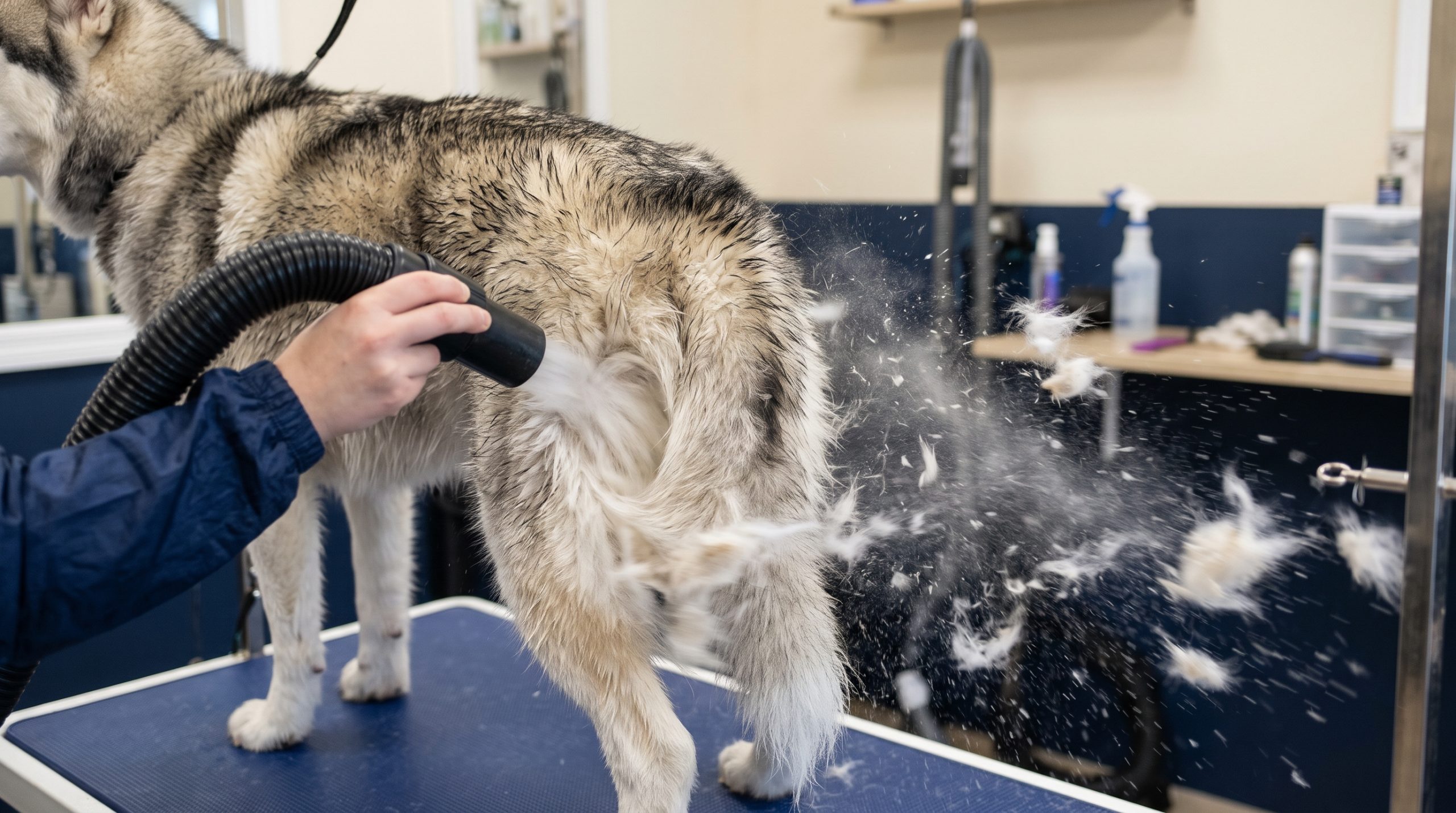
Veterinary dermatology treats trapped moisture as the direct cause of the two most common post-bath problems in coated breeds: hot spots and Malassezia overgrowth. Water sitting against the skin raises local skin temperature, and that warmth softens the stratum corneum until the barrier is soft enough for yeast to colonize. Heat-based drying does not solve this. It makes the outside of the coat feel dry while the undercoat stays wet against the epidermis, which is exactly the environment Malassezia needs. Dog dryers for home grooming that push ambient air at high velocity do the opposite. The air reaches the skin and strips the water. The barrier stays intact.
The AKC grooming resources note that human hair dryers reach surface temperatures that burn canine skin at a distance of a few inches, even when the air feels mild to a human hand. Canine skin is thinner than human skin over most of the body, and the thermal threshold where a mild warmth becomes a first-degree burn is lower than most owners realize. Velocity avoids that threshold entirely. A high-velocity dryer on an ambient air setting never crosses the temperature that would damage the barrier, which is why velocity is the only safe mechanism in dog dryers for home grooming on a sensitive or coated dog.
The core dog grooming guide establishes the base cadence for coat care, and the dryer review hub covers the wider model landscape. This article narrows that field to the three dog dryers for home grooming that move the most air with the least heat, because a dryer inside any dog dryers for home grooming kit that runs hot and slow is a dryer that leaves the undercoat wet and the skin inflamed.
Section 3: Bio-Mechanical Breakdown
Every evaluation of dog dryers for home grooming comes down to airflow versus heat. Motor horsepower and CFM together determine how much air actually moves through the coat. Heat control decides whether that air is safe to point at a dog’s skin. Ergonomics is the variable most owners underestimate, because a heavy nozzle dropped into a dense coat mid-dry undoes twenty minutes of patient work.
3.1 The Pro Tier: Metro Air Force Commander
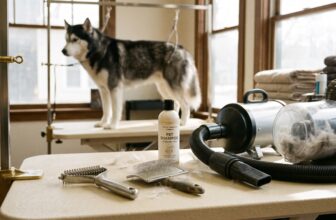
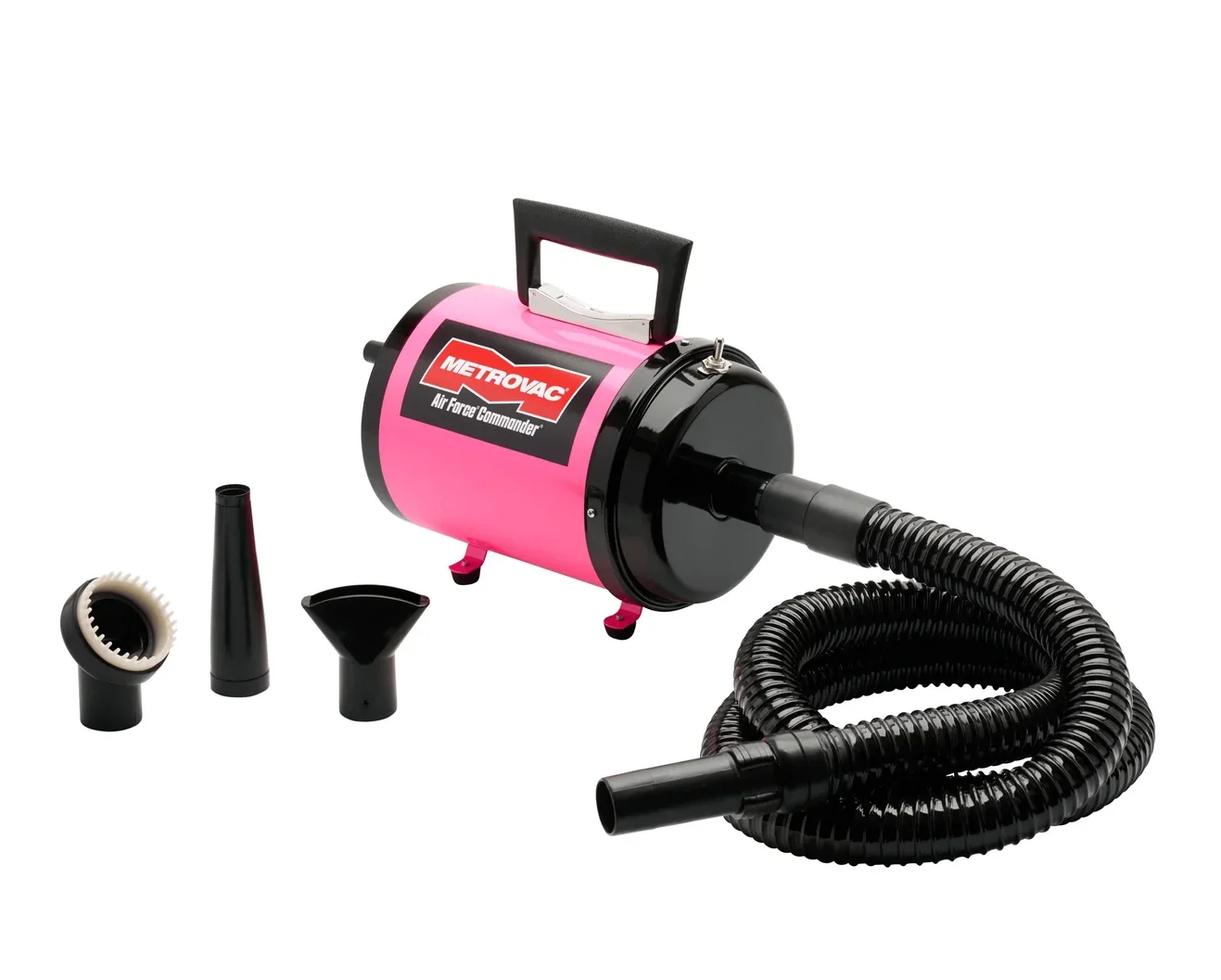
The Metro Air Force Commander is the reference point for dog dryers for home grooming on a full double coat because its 4.0 HP motor produces 130 CFM at 14,000 to 28,000 feet per minute, and that airflow reaches the undercoat where water hides. The all-steel USA build matters for durability as much as for performance. A plastic housing on a motor that size would rattle at the same velocity, and the vibration that rattles the housing also travels into the coat and into the dog. The variable speed control is the feature that most owners undervalue. It lets you start on the lowest setting with a nervous dog and climb only when the dog stops bracing, which is the entire desensitization ladder built into the tool. This is the only dryer in the roundup that clears a full double coat on ambient air alone. Any set of dog dryers for home grooming that cannot clear a husky in under twenty minutes on ambient air is not a full-coat dryer.
Clinical Verdict: The Metro Air Force Commander is the consensus pick for full-coat deshedding and drying on dog dryers for home grooming because the high-velocity airflow strips water from the undercoat without raising skin temperature. The variable speed control is what makes it safe on a nervous dog.
| Product Image | Product Name | Verified Spec | Primary Button / Our Rating |
|---|---|---|---|
Pro Tier: Salon Standard |
|
| |
Mid Tier: Cordless Heavy Duty |
|
| |
Budget Tier: Quiet & Light |
|
|
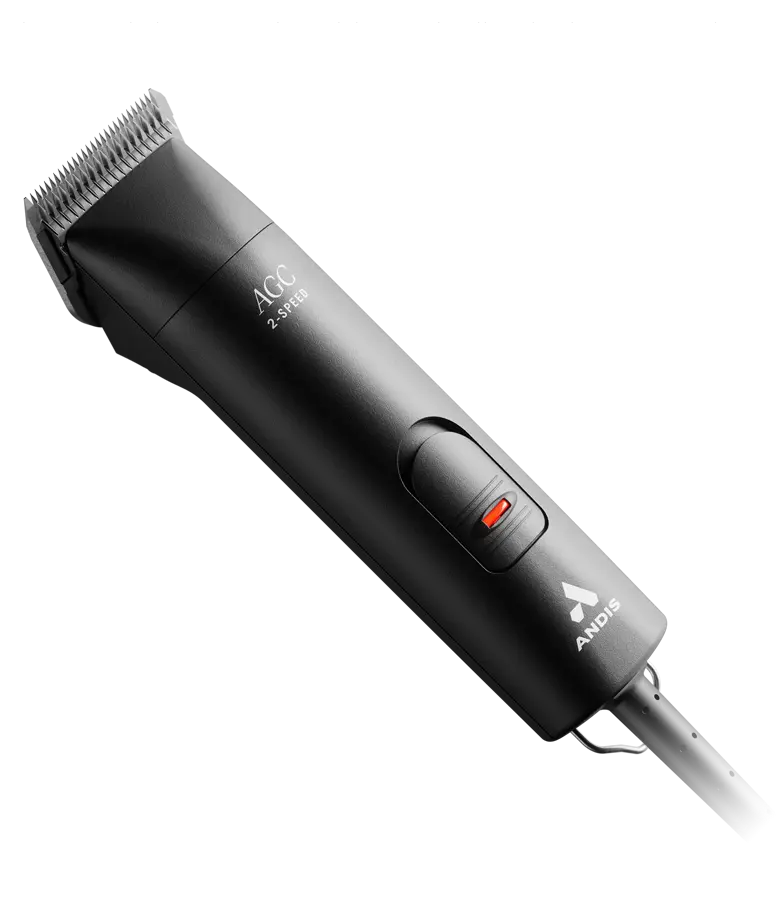
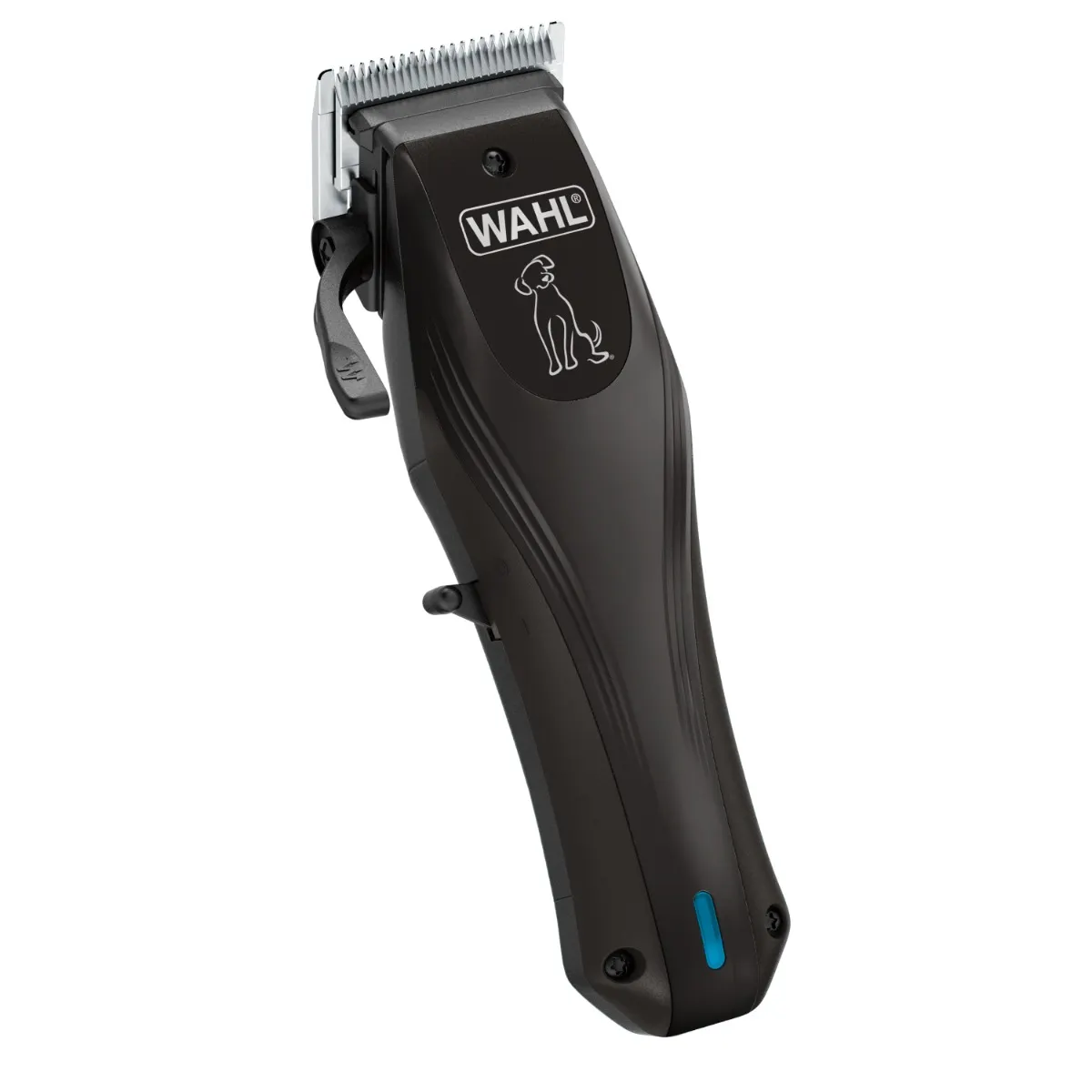
3.2 The Mid Tier: Flying Pig High Velocity
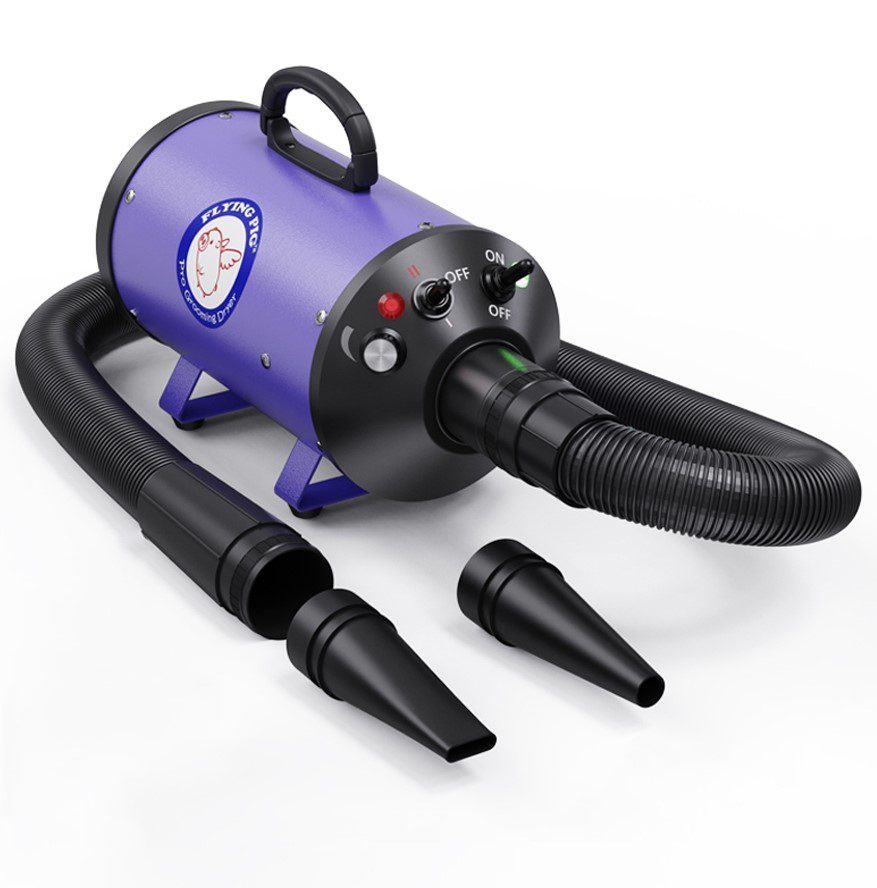
The Flying Pig High Velocity earns the mid slot in this roundup of dog dryers for home grooming because it delivers 240 CFM at 28,000 feet per minute through a 1400W motor, and the steel shell dampens the vibration that a plastic body would pass into the hose. That steel build matters on a dog that is already noise-sensitive, because the vibration that travels into the coat reads as a physical threat even when the sound is tolerable. The adjustable heat setting from 81 to 160 degrees Fahrenheit is a double-edged feature. In a cold climate, the low end of that range dries a damp coat faster without pushing surface temperature into the burn zone. In a warm climate or on a sensitive-skinned dog, the heat dial has to stay at minimum, because the same feature that speeds winter drying can cross the thermal threshold on an atopic dog. This dryer is also louder than the Metro, which matters for the same nervous-dog reason.
Clinical Verdict: The Flying Pig is the optimal mid-tier choice among dog dryers for home grooming for medium coats. The adjustable heat is a valuable feature for cold climates, but the heat dial must stay at minimum for sensitive skin, and the steel shell does not fully offset the higher noise level.
| Product Image | Product Name | Verified Spec | Primary Button / Our Rating |
|---|---|---|---|
Pro Tier: Lifetime Warranty |
|
| |
Mid Tier: Steel Shell Power |
|
| |
Budget Tier: High CFM Value |
|
|
3.3 The Budget Tier: SHELANDY Groomer Partner
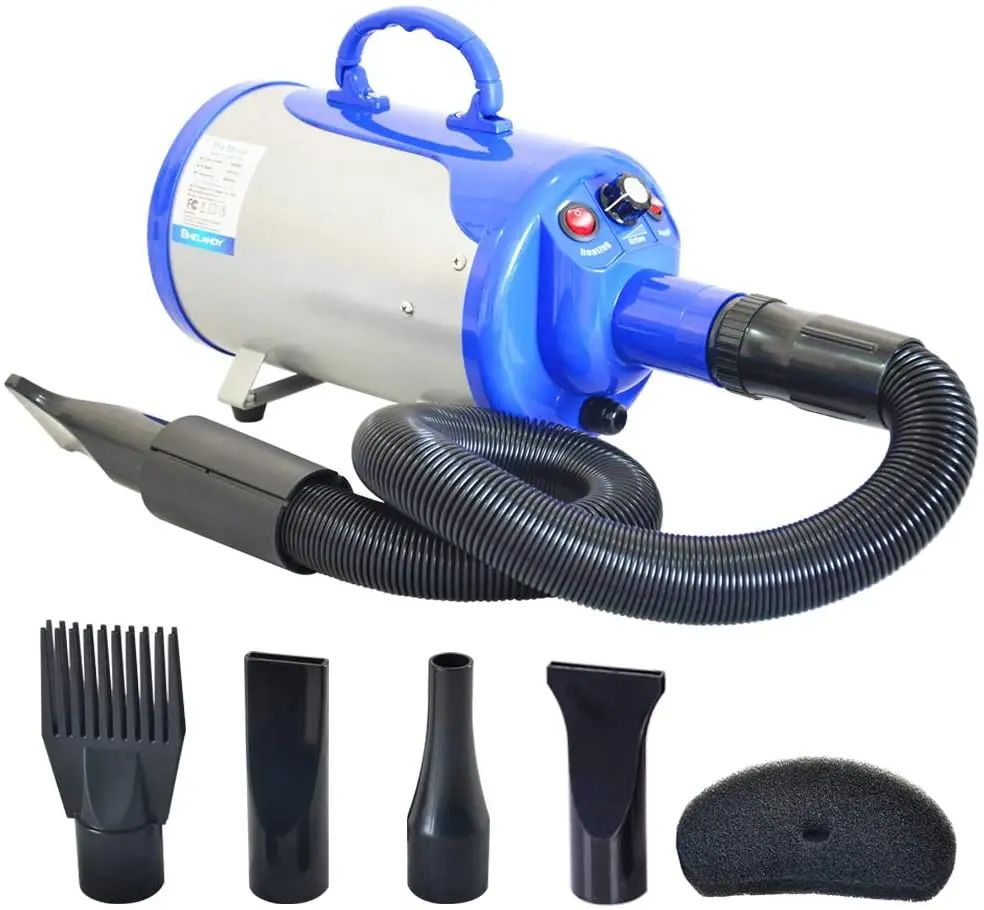
The SHELANDY Groomer Partner occupies the budget slot in this roundup of dog dryers for home grooming because it delivers 84.7 CFM through a 2400W motor at a price point that makes it the entry-level pick for small dogs and touch-up work. The plastic casing keeps the weight low, which matters when the user is holding the hose at a downward angle over a small dog for ten minutes. That same plastic casing is louder than the steel housings on the higher tiers, and the lower CFM means the dryer will struggle on a thick double coat or a heavy deshedding job. The adjustable heat setting is useful for paws and faces where the drying pass is short, but it does not extend the dryer into full-coat territory. This is not a knock on the SHELANDY. It is a coat-matching point. Dog dryers for home grooming at the budget end are touch-up tools, and the SHELANDY is a good touch-up tool for the price.
Clinical Verdict: The SHELANDY is the right budget choice for small breeds and touch-up drying on dog dryers for home grooming. Do not use it on a heavy double coat or a heavily matted dog, because the lower CFM cannot reach the undercoat before the owner gives up.
| Product Image | Product Name | Verified Spec | Primary Button / Our Rating |
|---|---|---|---|
Pro Tier: Max Suction |
|
| |
Mid Tier: All-in-One |
|
| |
Budget Tier: High-Capacity Entry |
|
|
3.4 The Anatomy of a Nozzle: Why Attachments Matter
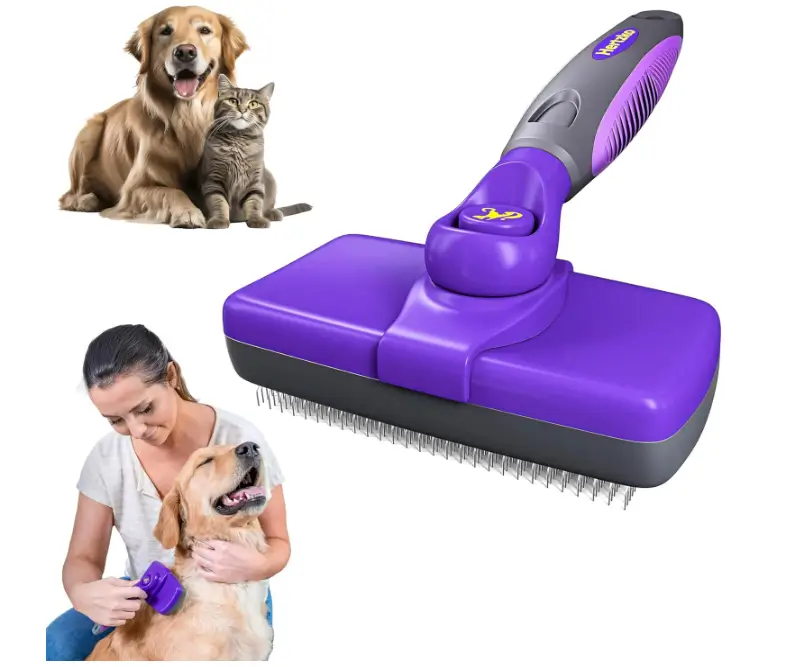
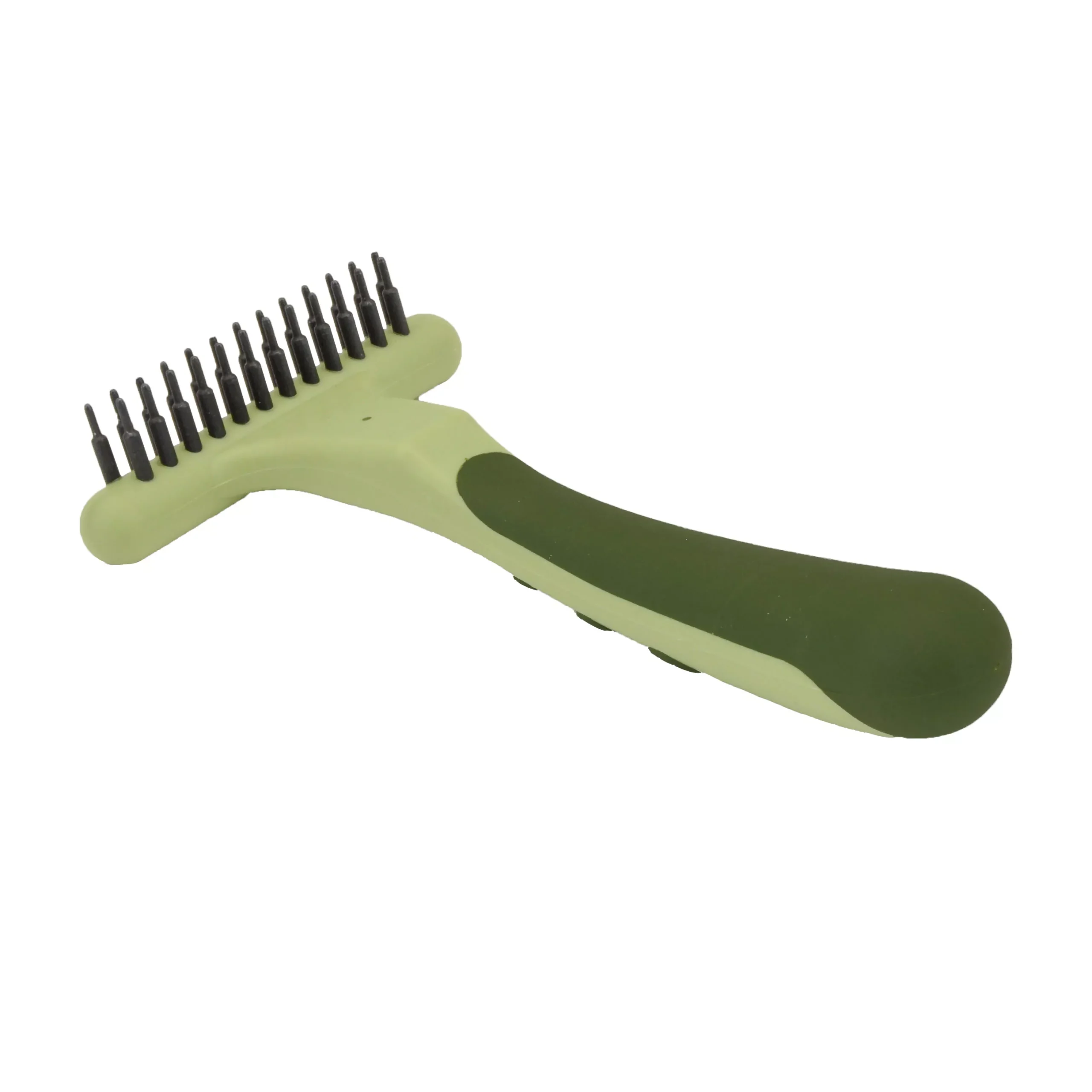
The nozzle decides where the airflow lands on the dog, and it is the most under-appreciated variable in the entire category of dog dryers for home grooming. The round nozzle concentrates airflow into a tight stream that reaches the undercoat, which is the setting the Metro was built around for deshedding a double coat. The flat nozzle fans the air across a wider surface, which is the right choice for the face and paws where the drying pass needs to be short and controlled. Using the wrong nozzle defeats the purpose of a high-velocity dryer. A wide nozzle on a dense double coat spreads the air too thin to reach the skin, and a round nozzle on a nervous face pushes a concentrated stream at exactly the wrong spot. The attachment is not a bonus feature of dog dryers for home grooming. It is the piece that decides whether the airflow reaches the water or just skims the fur.
Clinical Verdict: Always pair the Metro with the round nozzle for deshedding. Use the flat nozzle on the Flying Pig for faces. Replace the SHELANDY nozzle if it restricts airflow, because a restricted nozzle on a low-CFM dryer makes the drying pass take twice as long.
| Product Image | Product Name | Verified Spec | Primary Button / Our Rating |
|---|---|---|---|
Pro Tier: Zero Abrasion |
|
| |
Mid Tier: Easy Clean |
|
| |
Budget Tier: Deshedding |
|
|
3.5 Wattage and Real Heat Output
A wattage rating is the easiest number to misread on dog dryers for home grooming. A 2400W unit and a 1400W unit can produce the same airflow at the nozzle, because wattage measures electrical draw, not delivered heat. What matters at the skin is the temperature of the air column where it hits the coat, and that number is driven by the motor design, the housing, and how far the nozzle sits from the heating element. A high-wattage dryer that runs cool at the nozzle is a safer tool than a lower-wattage dryer that pushes hot air, because the skin only feels the air temperature and never the power draw. The Flying Pig’s adjustable heat range from 81 to 160 degrees Fahrenheit is the only spec in this roundup that gives the owner real control over delivered temperature. On any dryer, the correct setting for a sensitive or double-coated dog is the lowest temperature that still moves water, because heat above the skin’s thermal threshold is the mechanism that causes clipper-style burns during a dry.
Clinical Verdict: The Flying Pig’s adjustable heat gives real control over the delivered temperature on dog dryers for home grooming, but only if the dial stays at the low end. Wattage ratings do not predict heat at the nozzle, and a low-wattage dryer running ambient air is safer than a high-wattage dryer running warm.
| Product Image | Product Name | Verified Spec | Primary Button / Our Rating |
|---|---|---|---|
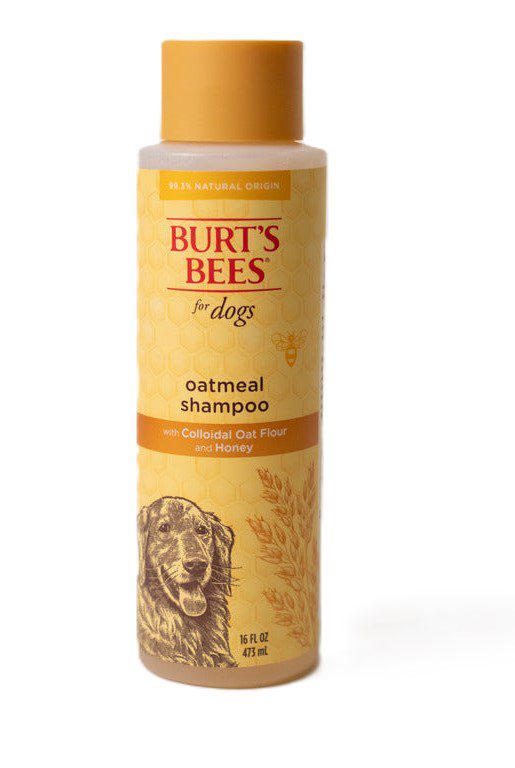
Pro Tier: Prescription-Strength Antiseptic |
|
| |
Mid Tier: OTC Medicated |
|
| |
Budget Tier: Barrier-Safe Maintenance |
|
|
3.6 Hose and Handle Ergonomics
Hose length and handle design decide whether the owner can complete a twenty-minute dry without dropping the nozzle into the coat. A short hose forces the user to lean in, which changes the angle of the airflow and pushes the nozzle closer to the skin than the user intends. A long hose lets the user stand back and sweep the nozzle across the coat in the slow arcs that keep the airflow moving. Handle design matters for the same reason. A rigid plastic handle transfers every vibration into the palm, and a palm that is buzzing after five minutes is a palm that starts clamping down. A rubberized or padded handle dampens that vibration and lets the user keep the grip light, which is the only way to hold the airflow steady without pushing the nozzle into the coat. The biological goal inside dog dryers for home grooming is a steady hand and a moving nozzle, because a stationary nozzle on any setting raises skin temperature where the air stops sweeping.
Clinical Verdict: The Metro and the Flying Pig both ship with long hoses and steel housings that keep vibration out of the palm. Replace the SHELANDY hose if it is shorter than four feet, because a short hose forces the user to crowd the coat.
| Product Image | Product Name | Verified Spec | Primary Button / Our Rating |
|---|---|---|---|
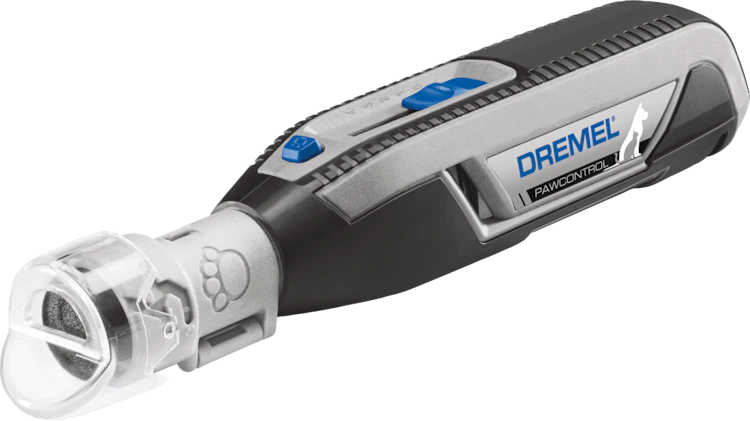
Pro Tier: High-Output Precision |
|
| |
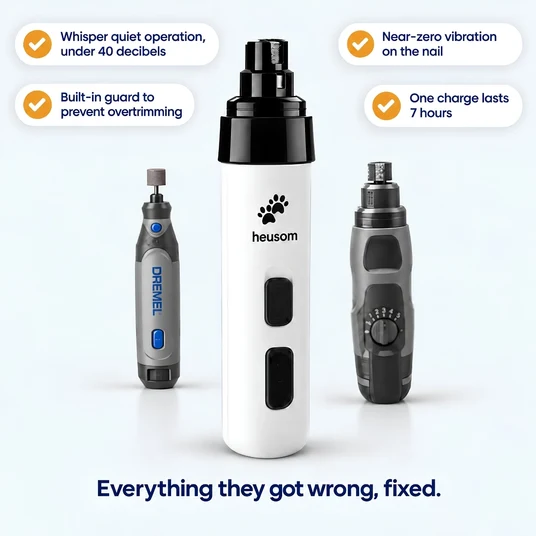
Mid Tier: Ultra-Low-Noise Entry |
|
| |
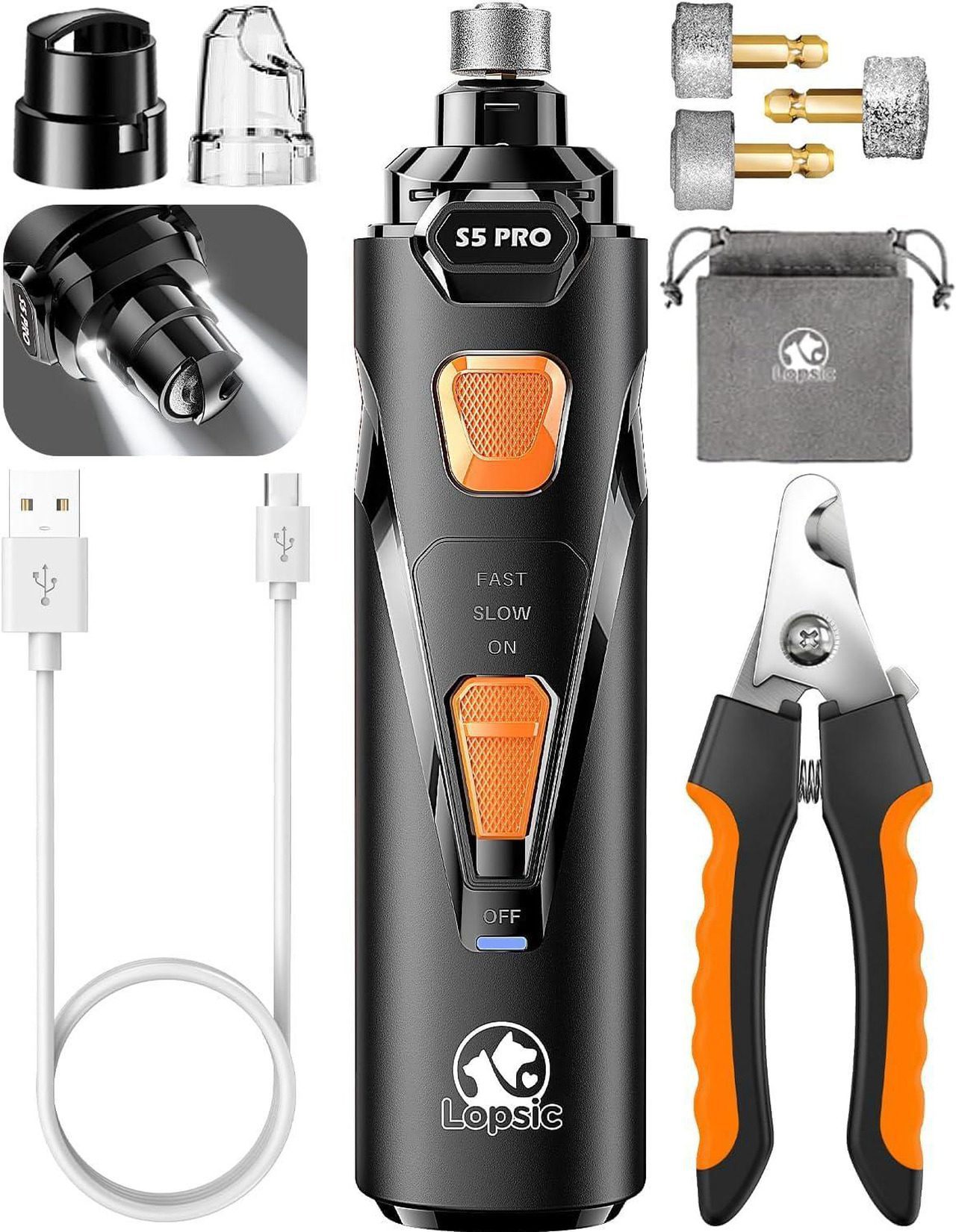
Budget Tier: Whisper-Quiet Desensitization |
|
|
Section 4: Choice Architecture
The decision matrix for dog dryers for home grooming runs on coat density, not on budget. If your dog has a double coat like a Husky or a Golden Retriever, buy the Metro Air Force Commander. A heavy shedder that blows coat twice a year needs the same tool for the same reason, because the undercoat is where the water hides no matter which breed produces it. If your dog has a medium coat like a Beagle or a Boxer and you live in a cold climate where winter drying takes forever, buy the Flying Pig High Velocity. The adjustable heat helps in the winter, and the 240 CFM airflow is enough for a medium coat without the Metro price tag. If your dog is a small breed like a Yorkie or a Maltese and the main job is paws and faces, buy the SHELANDY Groomer Partner. Do not spend the Pro tier money if the dog will never see a dense coat. Compare full specs at the dryer review hub before committing.
Sensory Check: Brushless vs. Rotary Motors
Motor type decides what a dog hears and feels before the nozzle ever points at the coat, and that sensory load is the reason two dog dryers for home grooming with the same airflow rating can produce completely different reactions. Brushless motors eliminate the carbon brush contact that produces the buzzing hum on cheaper units, and they hold a steadier speed as the unit warms up. Rotary motors, like the one in the Metro Air Force Commander, trade a little weight for airflow that does not sag under load. Pivot motors sit at the bottom of the price ladder and slow noticeably when the hose kinks. That slowdown is audible. It is also the moment a dog that was tolerating the dryer decides the tool is a threat.
Noise behaves the same way across the motor types sold as dog dryers for home grooming. A larger motor turning at lower revolutions produces less high-frequency whine than a small unit spinning fast, which is why the Metro reads as quieter than its CFM suggests. Verify any decibel figure against the manufacturer’s own listing, because measurement distance and method change the number. Vibration travels through the hand as much as the ear, and the steel housings on the Metro and Flying Pig pass less vibration into the palm than a plastic housing does. That tactile control is what keeps the nozzle moving and the dog calm across a full dry.
Section 5: Clinical Contraindications
Never use a human hair dryer on a dog. Human hair dryers reach surface temperatures that burn canine skin at a distance of a few inches, even when the air feels mild to a human hand, and the burn is not always visible until the skin starts to slough. Never use high heat on a double coat. High heat dries the surface fur and leaves the undercoat damp against the skin, which is the exact condition that produces hot spots within twenty-four hours. Never hold the nozzle in one spot. Even a safe ambient-air dryer concentrates heat if the nozzle stays still, so the pass has to keep moving across the body in slow arcs. Never use a dryer on a dog with an open wound or a hot spot. The airflow pushes bacteria deeper into the lesion and the vibration adds discomfort on skin that is already inflamed. Never skip the towel dry. A high-velocity dryer works best on a towel-dried coat, because the towel removes the standing water and the velocity clears the rest, while a soaking wet coat forces the dryer to work against water volume it cannot move. The AVMA veterinary literature documents thermal burns and post-grooming skin compromise as real outcomes in dog dryers for home grooming, not cosmetic preferences. Every one of these contraindications exists because the wrong move with a dryer during a damp coat is not reversible in a single session, and the cost of correcting the damage lands in veterinary care.
Section 6: Pre-Dry Palpation & Maintenance Checklist
Run the palpation pass first before the towel comes out. The skin under a damp coat hides problems that the dryer will make worse, and a dog that is already flinching needs a vet visit rather than a drying session.
- Palpate for hot spots and lesions. Run flat palms across the back, flanks, and armpits to feel for warmth, swelling, or scabs the wet coat is hiding.
- Check mat tension at the friction zones. Pinch a mat behind the ear or under the front leg. A mat that tents the skin has to come apart before any airflow pushes dampness deeper into it.
- Smell the ears and the coat. A musty or yeasty odor under the damp fur signals an infection that needs a vet visit before grooming continues.
- Press each paw pad with your thumb. Heat or swelling at the pad means the dog is already uncomfortable and the drying pass will be worse.
- Scan for redness under thin-coated areas. Inflamed skin at the belly or inner thigh burns at a lower temperature than healthy skin does, so the heat dial goes to minimum on those patches.
Then run the maintenance pass while the dog is towel-dried and the dryer is still off.
- Towel dry the dog thoroughly. The towel removes the standing water so the dryer only has to clear what is trapped in the coat, and that cuts the drying pass time in half.
- Check the hose and nozzle for blockages. A blocked nozzle on any of the dog dryers for home grooming in this roundup restricts airflow and forces the motor to work harder and run hotter.
- Start on the lowest speed setting. Build tolerance before you build airflow, because a dog that spooks on the first pass will fight the rest of the dry.
- Keep the nozzle moving. Slow arcs across the body, never a stationary point, because the concentrated airflow is what raises skin temperature if it stays still.
- Take a break every ten minutes. Check the skin temperature under the coat and let the dog reset, because a slow dry is safer than a fast burn.
Never dry a dog with a visible skin infection or a fever. Refer to a veterinarian first. The full guides index covers breed-specific coat variations that change how dog dryers for home grooming should be tuned.
Interlude: The Desensitization Ladder
The desensitization ladder is the only technique that lets dog dryers for home grooming work on a nervous dog without flooding the dog’s stress response. Turn the dryer on in another room first, with the dog free to leave. Then the next room. Then in the same room, still on the lowest setting. Then touch the dog with the dryer off, so the dog feels the hose and the nozzle before any air moves. Only then turn the dryer on in the dog’s presence, at a distance, and let the dog close the gap on its own.
Each step is one rung of the ladder, and the dog has to stay calm at one rung before you climb to the next. Skipping rungs is how flooding happens, and flooding teaches the dog that the dryer is dangerous. The PetMD dog bathing guide covers how the ladder should interact with bath timing so a bath does not undo a week of desensitization work.
Section 7: Clinical Citations & Vet Disclaimer
The AVMA veterinary literature documents thermal burns and post-grooming skin compromise as real outcomes in coated breeds, not cosmetic preferences. The AKC grooming resources note that moisture trapped in the undercoat is the leading driver of hot spots and Malassezia overgrowth, and that velocity drying is the only safe mechanism for clearing that moisture without crossing the skin’s thermal threshold.
Vet Disclaimer: This is for educational purposes. Consult your veterinarian for active skin infections or a coat that has been damp against the skin for more than a few hours.
Read more about our editorial standards and our lead author’s credentials.
Related Cluster
Different coat types need different dog dryers for home grooming. The breed protocols hub covers coat density and drying time by breed group. The Husky breed guide covers the heaviest end of the double coat spectrum and why the Metro is the only dryer in this roundup that clears that coat on ambient air. The Golden Retriever breed guide covers the denser undercoat that makes the round nozzle the right attachment for deshedding passes.
Section 8: Frequently Asked Questions
Can I use a human hair dryer on my dog?
No. Human hair dryers reach surface temperatures that burn canine skin at a distance of a few inches, even when the air feels mild to a human hand. The burn is not always visible until the skin starts to slough, which is why velocity drying is the only safe option in dog dryers for home grooming.
Why does my dog still smell wet after using a dryer?
The undercoat is still damp against the skin. A heat-based dryer dries the surface fur and leaves the dense layer underneath wet, which is the exact condition that feeds Malassezia. A high-velocity pass with the round nozzle on a towel-dried coat clears that undercoat before the smell sets in.
What is the difference between CFM and FPM?
CFM measures how much air volume moves per minute, and FPM measures how fast that air travels. The Metro Air Force Commander runs 130 CFM at up to 28,000 FPM, and the volume is what clears the undercoat while the speed is what reaches the skin. A dryer with high FPM but low CFM will feel strong but leave the coat damp.
How long should I dry a double-coated dog?
Twenty to thirty minutes with a 4.0 HP high-velocity dryer on a Husky or Golden Retriever. Spring blowout pushes that longer. Stop when the skin feels dry to the touch. Surface fur that looks dry is not the signal, and a towel-dried coat cuts the total time by about half in any of the dog dryers for home grooming in this roundup.
Can I use a dog dryer on a cat?
Only on the lowest setting with a wide nozzle and a cat that is already desensitized to the noise. Cats are more sensitive to high-frequency sound than dogs, and the concentrated round nozzle that works on a double coat is too intense for most cats. Most dog dryers for home grooming are not built with a low enough setting for a cat that has not been through a desensitization ladder first.


The PGA Hardware Desk analyzes and verifies mechanical specifications (SPM, CFM, motor torque, blade metallurgy) against biological and veterinary baselines. We do not accept payment for positive reviews. Our recommendations are derived from a synthesis of manufacturer technical data, veterinary ergonomics, and aggregated professional user experiences.