The first 24 hours with a new puppy represent the largest environmental shift the animal has experienced in its short life. The puppy has just been separated from its mother and littermates, placed in a vehicle, and introduced to an unfamiliar scent environment. The biological stress response, measured as elevated cortisol, peaks during this window (Overall, Manual of Clinical Behavioral Medicine for Dogs and Cats, 2013). The goal of the first 24 hours with a new puppy is not to teach complex commands or show off the new arrival to the neighborhood. The goal is to establish a safe zone, stabilize blood sugar through consistent feeding, and begin the elimination schedule that will carry the household through the coming months. This procedural protocol outlines the exact steps required to minimize trauma and set the foundation for a well-adjusted adult dog.
Written by: PGA Nutrition & Dietetics Desk
Reviewed by: PGA Editorial Board (Zaheer Aujla, Head of Board)
1. Clinical Answer & Immediate Triage
The first 24 hours with a new puppy reduce to three operational priorities. Establish a Safe Zone that limits the puppy to a small, controlled space. Stabilize blood sugar by feeding the same food the breeder used, split across three or four small meals. Start the elimination schedule at once, taking the puppy to the designated potty area before every meal, after every meal, and after every nap. Everything else can wait. Visitors and training sessions do not belong in the first day, and toys can sit untouched, because the puppy’s stress load is already at its ceiling and each new stimulus compounds it (Overall, 2013). Calm and containment and food are the only interventions that matter during the first 24 hours with a new puppy. That combination covers the entire clinical agenda for the day.
If your puppy has stress diarrhea from the transition:
(affiliate link)
If you need to safely clean up accidents:
(affiliate link)
If you need high-value treats for positive reinforcement:
(affiliate link)
2. The Environmental Moat (Puppy Proofing)
A puppy’s curiosity is biological, and its physical coordination is not yet developed enough to manage that curiosity safely. Puppies explore the world with their mouths, which places electrical cords and toxic plants in the lethal-hazard category, and small swallowable objects belong on the same list (Overall, 2013). The first 24 hours with a new puppy therefore require physical containment rather than supervision alone. Supervision fails whenever the owner looks away, and one glance at a phone is long enough for a puppy to bite through a lamp cord or swallow a bottle cap. The environment has to be designed so the puppy cannot reach the hazard in the first place.
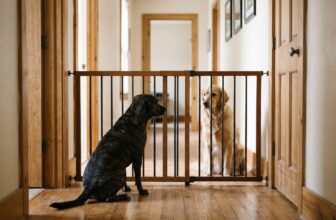
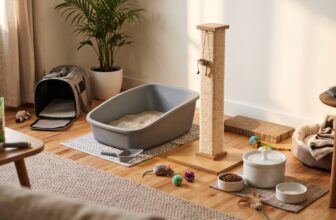
Define two zones before the puppy enters the house. The Safe Zone is a crate or an exercise pen that holds a bed and a water bowl with one chew toy beside them. The Danger Zone is every other square foot of the home. The Safe Zone is where the puppy eats, sleeps, and rests. The Danger Zone is where the puppy goes only on a leash or in arms. That physical separation is the working core of the first 24 hours with a new puppy, because it removes the conditions under which household accidents occur (American Veterinary Society of Animal Behavior, 2021 position statement on humane dog training).
Walk the Danger Zone at puppy eye level before the arrival. Kneel down and scan for cords, exposed outlets, rugs that slide, shoes within reach, trash cans without lids, and houseplants that appear on the ASPCA toxic plant list. Move every item that could be swallowed or chewed. Secure cabinet doors below waist height, and gate the kitchen so the puppy cannot reach under the stove or the refrigerator where dropped medication and old food collect. The puppy care library covers the full proofing checklist, and the new owner guides walk through the room-by-room audit for the first 24 hours with a new puppy.
3. The Product & Ingredient Matrix
Four product categories support the first 24 hours with a new puppy, and each one maps onto a specific window of the day. Probiotic support stabilizes the gut during the transition stress of the first meal. Cleansing products manage the accidents that will happen before house training takes hold. High-value treats build positive reinforcement without overwhelming a stressed puppy. Crate and bedding supplies create the den environment that supports the first night’s sleep. Read each category against the timeline and the first day becomes a sequence rather than a scramble.
3.1 Probiotic & Gut Stabilization (Hours 2-8: First Meal)
Puppies carry a high metabolic rate relative to body mass, and blood glucose falls quickly when they skip a meal. Small-breed puppies in particular are prone to hypoglycemia if the gap between meals stretches beyond six hours (Case et al., Canine and Feline Nutrition, 3rd ed.). Feed the same food the breeder provided, because a diet change on day one compounds stress-induced diarrhea with diet-induced diarrhea. Ask the breeder for a small bag of the current kibble or a sample pack, and plan a gradual transition after the puppy has settled. Add a probiotic containing Enterococcus faecium SF68 to the first meal to stabilize the gut microbiome during the transition (Purina Pro Plan FortiFlora label; WSAVA Global Nutrition Committee). Keep the water bowl filled and inside the Safe Zone so the puppy can drink without leaving its den. Probiotic support belongs in the first 24 hours with a new puppy because the stress of rehoming measurably shifts the gut microbiome, and early support reduces the severity of stress colitis.
Clinical Verdict: Feed the same food as the breeder. Add FortiFlora to the first meal to stabilize the gut microbiome during the first 24 hours with a new puppy.
3.2 Cleansing Products & Accident Management (Hours 8-12: Elimination)
Awake puppies need to eliminate every one to two hours, and the earliest sign is a circular sniffing pattern that precedes the squat by seconds (Overall, 2013). Accidents will happen during the first 24 hours with a new puppy, and the response matters more than the accident itself. Enzymatic cleaners break down the odor compounds that remain after surface cleanup, and they are commonly used for accident cleanup because they address the source of the smell rather than the visible stain (Overall, 2013). Pet-safe wipes handle paw and coat cleanup after an accident without stripping the skin barrier that a full bath would disturb. Keep the cleaning supplies inside the Safe Zone so they are within reach when the puppy squats. Yelling or pushing the puppy away during cleanup teaches fear of the owner and does nothing to change the behavior, because the puppy cannot connect the correction to an act that finished seconds earlier.
Clinical Verdict: Use enzymatic cleaners and pet-safe wipes during the first 24 hours with a new puppy. Clean calmly and never punish an accident.
3.3 High-Value Treats & Positive Reinforcement (Hours 8-24)
High-value treats drive positive reinforcement training, and they work best when reserved for the behaviors the owner most wants to build. Use a pea-sized portion of a soft, smelly treat for elimination outside, for calm behavior in the crate, and for any offered eye contact during the first 24 hours with a new puppy (AVSAB, 2021 position paper on humane dog training). Do not use treats to lure the puppy out of hiding or to bribe past a fear response, because that pattern teaches the puppy to expect food for doing nothing. Keep treats to a small fraction of the daily calorie total and subtract that portion from the meal so the puppy does not gain weight during the transition, following the treat allowance principle in the WSAVA Global Nutrition Committee toolkit. A soft chew that doubles as a probiotic delivery vehicle solves two problems at once in the early days.
Clinical Verdict: Reserve high-value treats for elimination, crate calm, and offered eye contact during the first 24 hours with a new puppy. Keep treats to a small fraction of the daily calorie total.
3.4 Crate & Bedding Supplies (Hours 12-24: First Night)
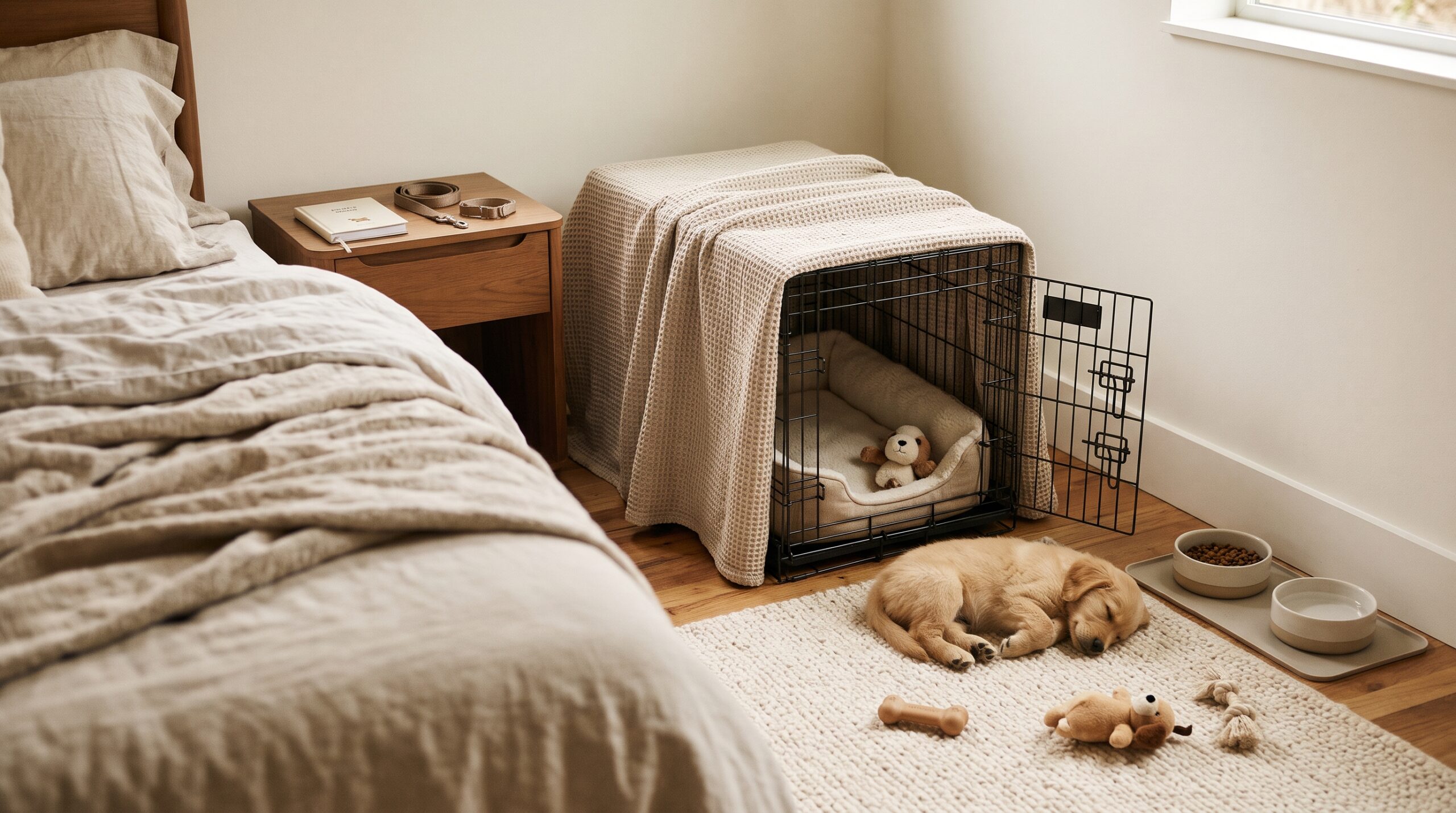
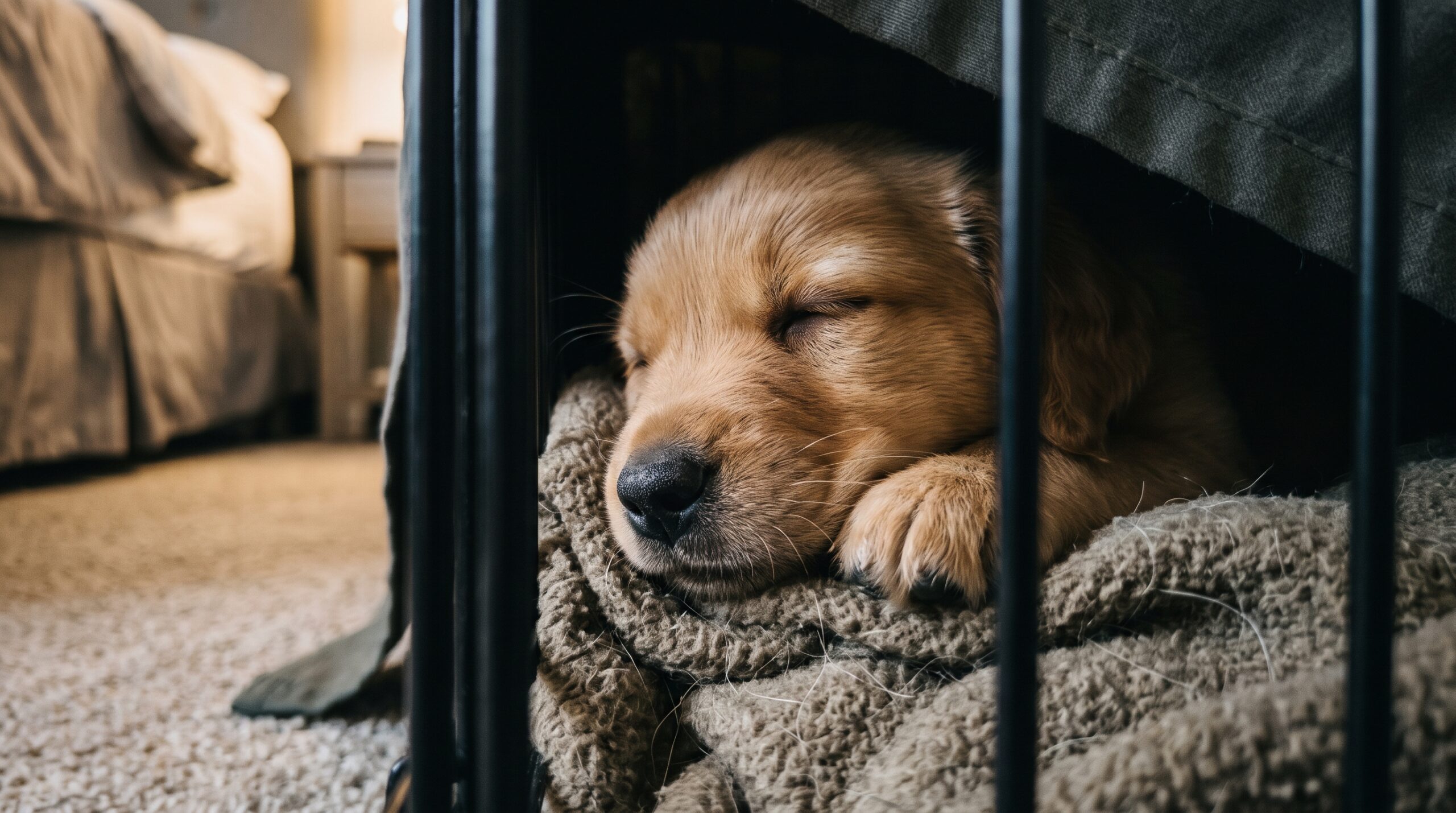
The puppy will cry on the first night, because it has just been separated from the littermates it has slept against since birth (Overall, 2013). Do not bring the puppy into the bed, because once it sleeps there it will not accept the crate without a fight. Place the crate next to the bed at mattress height so the puppy can smell and hear the owner. Cover the crate on three sides with a light blanket to simulate a den and block the visual chaos of a new room. Use a washable crate pad rather than a loose blanket, because a puppy that chews and ingests fabric risks an intestinal obstruction. Respond to crying with one quiet potty break, no lights and no conversation, then return the puppy to the crate. Repeat as needed through the night. The AVSAB opposes punishment-based training, and withholding comfort entirely on the first night qualifies as punishment for a distress the puppy cannot control (AVSAB, 2021).
Clinical Verdict: The crate must be next to your bed for the first week. Do not respond to crying with attention; respond with a quick potty break and return to the crate.
Daily Hygiene 
|
VOHC Approved 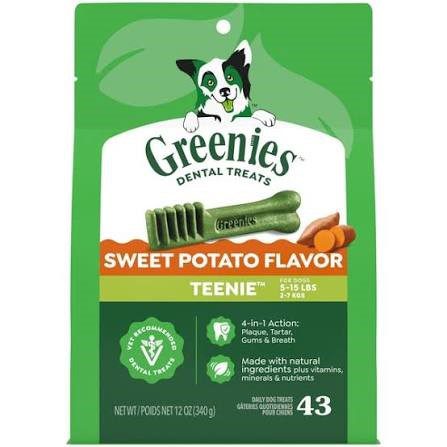
|
Gut-Skin Axis 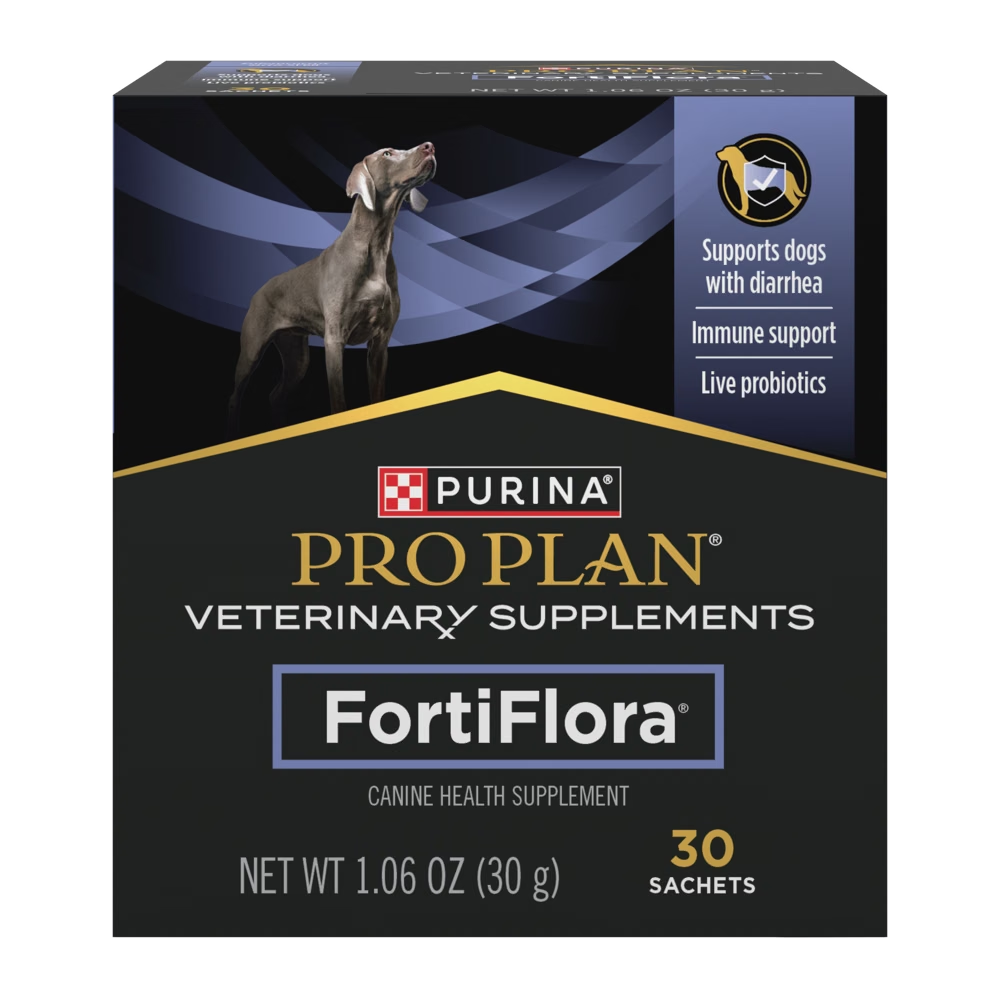
|
Gut Support 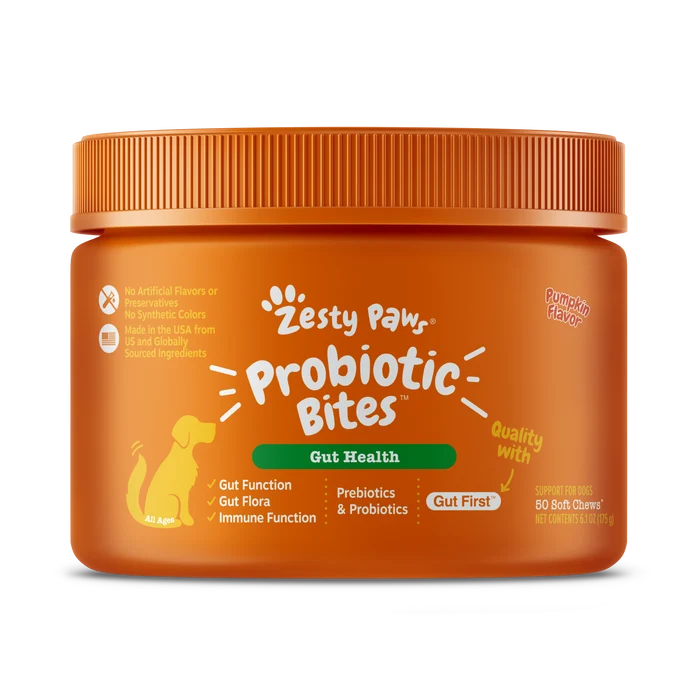
|
Our Rating:
4.8 | Our Rating:
4.9 | Our Rating:
4.9 | Our Rating:
4.7 |
(affiliate link)
4. The Socialization Window
The critical socialization window runs from three to sixteen weeks of age, and experiences during that window shape the adult dog’s response to novelty for the rest of its life (Scott and Fuller, Genetics and the Social Behavior of the Dog, 1965). The puppy is not fully vaccinated during most of that window, so it cannot attend dog parks, pet store meet-and-greets, or puppy classes that admit unvaccinated dogs. That constraint does not justify confinement. Controlled exposure to new surfaces and sounds and safe people remains possible and remains essential. Carry the puppy on paved sidewalks, let it walk on a rubber mat and a metal grate, play recorded thunder and traffic at low volume, and invite one calm adult at a time to sit quietly while the puppy investigates. The dog training library covers the controlled-exposure checklist that begins after the first 24 hours with a new puppy.
5. Pediatric Contraindications
Never take a puppy to a public dog park before all vaccines are complete, because parvovirus survives on soil and pavement for months and the risk is highest in the first weeks after weaning (AAHA Canine Vaccination Guidelines, 2022). Never change the puppy’s food abruptly on day one, because the combination of a new environment and a new diet produces diarrhea that owners misread as illness. Never punish a puppy for crying at night, because the crying reflects separation distress and punishment damages the trust the household is trying to build (AVSAB, 2021). Never use human shampoo on a puppy, because the canine skin barrier is thinner and the acid mantle sits at a different pH than the human scalp (Case et al., 3rd ed.). Never leave a puppy unsupervised with a collar on inside a crate, because the collar can catch on a bar and strangle the dog. Never introduce a new food or probiotic while the puppy is on antibiotics without veterinary guidance, because antibiotic therapy alters the gut microbiome and complicates interpretation of digestive changes during the first 24 hours with a new puppy. Never feed toxic human foods such as xylitol, grapes, onions, or chocolate during the transition, because a puppy’s small body mass amplifies the dose-response curve and a single grape can trigger acute kidney injury in a dog of any size (Pet Poison Helpline). Never substitute human probiotic products for veterinary probiotics during the transition, because human strains are selected for the human gut and doses can trigger severe gastrointestinal distress in a puppy already adapting to a new environment (WSAVA Global Nutrition Committee). Never ignore lethargy, diarrhea, or refusal to eat in a new puppy, because parvovirus and other infectious diseases present with exactly those signs and early treatment improves outcomes (AAHA Canine Vaccination Guidelines, 2022). The AVMA literature on pediatric care informs this guidance, and the primary source at JAVMA should be reviewed before altering any plan for a puppy with a known health condition.
6. Pre-Diet Assessment Markers
Five clinical markers establish a baseline during the first 24 hours with a new puppy. Without them, improvement cannot be measured objectively, and subtle problems go unnoticed until they become emergencies.
- Stool Quality: Evaluate using the Bristol Stool Scale, where a score of 3 or 4 indicates optimal hydration and form. Loose stool in the first 24 hours with a new puppy usually reflects transition stress, and persistent loose stool beyond 48 hours warrants a veterinary call.
- Body Condition Score (BCS): Determine the puppy’s baseline on a 1 to 9 scale. Weigh daily on a kitchen scale for the first week, because small breed puppies can slip into hypoglycemia when weight drops even slightly.
- Gastric Distension: Monitor for abdominal bloating or discomfort one to two hours after eating, since a distended abdomen in a puppy can flag intestinal parasites or a feeding volume problem.
- Skin & Coat Quality: Check for dandruff, erythema, or flea dirt along the belly and groin, which can indicate an underlying skin issue or an ectoparasite that affects sleep and appetite.
- Antibiotic History: Review the breeder’s medical records and any recent antibiotic therapy, because antibiotics alter the gut microbiome and complicate interpretation of digestive changes during the first 24 hours with a new puppy.
6.1 Operational Checklist
Five operational items run alongside the clinical markers. Complete them before the puppy walks through the door.
- Remove all cables, shoes, and rugs from the main areas. Kneel at puppy eye level and scan for anything within reach that could be chewed, swallowed, or knocked over.
- Set up the crate with a washable pad and place it next to your bed. Cover three sides with a light blanket to simulate a den, and check that the crate door latches securely.
- Fill the water bowl and keep it in the safe zone. Puppies drink in small amounts throughout the day, and water placed outside the pen rarely gets used.
- Verify the food from the breeder and set a feeding schedule of three to four meals a day. Split the daily ration across the feeding times so blood sugar stays stable between meals.
- Take a photo of the puppy for the first vet visit. Weight, body condition, and markings recorded on day one give the veterinarian a baseline for comparison at the first wellness exam.
Never ignore signs of lethargy or diarrhea in a new puppy. Contact a veterinarian immediately. The practical care guides cover the owner-side logistics of the first 24 hours with a new puppy.
6.2 Sensory Check: Palatability and Feeding Response
The puppy’s willingness to eat signals whether the first 24 hours with a new puppy are going as planned. Watch for acceptance at the bowl, rate of consumption, and any sign of refusal, turning away, or pushing the food with a paw. A puppy that refuses the breeder’s food is telling the owner that stress has outpaced appetite, and the response is calm repetition rather than a switch to a different brand. Smell the kibble before serving. A fresh, meaty aroma is normal, while a rancid or sharply acidic smell signals oxidized fat and a degraded batch. Observe stool within 24 to 48 hours of the first meal and log texture, color, frequency, and any blood or mucus present. Weigh the puppy daily on a kitchen scale for the first week. These are owner-side observations, not diagnostic criteria, but they surface problems faster than a follow-up appointment.
The 3 A.M. Potty Break
The middle-of-the-night break is where first-day plans can break down. A puppy under sixteen weeks cannot reliably hold its bladder through a full night, and the crate training literature places the overnight limit at roughly one hour per month of age plus one (Overall, 2013). A two-month-old puppy therefore needs a break every three hours at most. The break has one purpose, which is elimination. Turn on no lights, speak no words, and carry the puppy to the pad or yard. Wait for it to go, reward with a single quiet marker word, and carry it back to the crate. Do not turn the break into a play session, a cuddle session, or a bottle feed, because the puppy will learn to wake for the engagement rather than for the need.
Log the timing of each break for the first week. Patterns emerge quickly, and a puppy that wakes at 2 A.M. on three consecutive nights is telling the owner the last meal sits too early or the water bowl should come up at 7 P.M. Adjust those two variables before adjusting anything else. The PetMD puppy reference covers overnight schedules in more depth, the PetMD nutrition reference covers feeding frequency, and the AKC nutrition library provides a general reference on how commercial puppy foods are evaluated.
7. Clinical References & Nutritional Disclaimer
According to the veterinary behavior literature on separation distress and early development, puppies separated from their littermates show elevated cortisol and distress vocalization for the first several nights, and the response that preserves the human-animal bond is proximity plus a brief potty break rather than punishment or unrestricted bed access. The critical socialization window from three to sixteen weeks shapes adult responses to novelty, and controlled exposure during that window supports long-term behavioral health even while the vaccination series remains incomplete (Overall, Manual of Clinical Behavioral Medicine for Dogs and Cats, 2013; AVSAB, 2021).
This is for educational purposes. Pediatric care and feeding plans should be tailored by a veterinarian.
Read more about the institutional research standards behind this protocol and the editorial leadership that reviews every clinical claim.
Related Cluster
The first 24 hours with a new puppy connect to every other system an owner manages in the first year. The breed-specific care protocols explain why certain lines carry higher rates of orthopedic and behavioral risk, the puppy care section covers vaccination timelines and feeding schedules, and the dog training library documents the socialization framework that begins during the first 24 hours with a new puppy.
8. Frequently Asked Questions
Written by: PGA Nutrition & Dietetics Desk
Reviewed by: PGA Editorial Board (Zaheer Aujla, Head of Board)
Research sources: PetMD, AKC, AVMA, AVSAB, veterinary journals
Last updated: 2026-01-15
As an Amazon Associate I earn from qualifying purchases. This article is editorially independent. Not a substitute for veterinary diagnosis.
Should I let my puppy sleep in my bed on the first night?
No. A puppy that sleeps in the bed on the first night will resist the crate on the second, and crate training is the foundation of house training and safe confinement. Place the crate next to your bed at mattress height so the puppy can smell and hear you. Respond to crying with a quiet potty break and return it to the crate.
What if my puppy won’t eat on the first day?
Offer the breeder’s food at the scheduled time and leave it down for fifteen minutes, then remove it. A puppy that skips one meal is usually stressed rather than sick, and appetite returns once the environment settles. Call a veterinarian if the puppy refuses two consecutive meals, shows lethargy, or develops diarrhea, because parvovirus presents with exactly those signs.
How often should I take my puppy out to pee?
Every one to two hours while the puppy is awake, plus immediately after every meal, nap, and play session. Overnight, use the one-hour-per-month-of-age rule and expect one or two breaks for a two-month-old puppy. Watch for circular sniffing, which precedes elimination by seconds.
Can I bathe my puppy on the first day?
No. Bathing on the first day adds a stressor on top of transport, separation, and a new environment, and a puppy’s skin barrier is thinner than an adult dog’s. Use pet-safe wipes for spot cleaning and wait at least a week before the first full bath. Never use human shampoo, because the canine skin pH differs from the human scalp.
When can my puppy meet other dogs?
Controlled meetings with known, fully vaccinated adult dogs can begin after the first vaccine series, ideally in a private yard rather than a public space. Dog parks and unknown dogs wait until the full vaccine series is complete, because parvovirus survives on shared ground. The socialization window closes at sixteen weeks, so balance the infection risk against the behavioral risk of isolation.


The PGA Clinical Desk analyzes AAFCO nutritional guidelines, veterinary dermatological baselines, and genetic sensitivities (MDR1). We translate dense institutional data from the AVMA and NAVC into actionable at-home care protocols. We do not provide veterinary diagnoses.