Written by: PGA Hardware & Equipment Desk
Reviewed by: PGA Editorial Board (Zaheer Aujla, Head of Board)
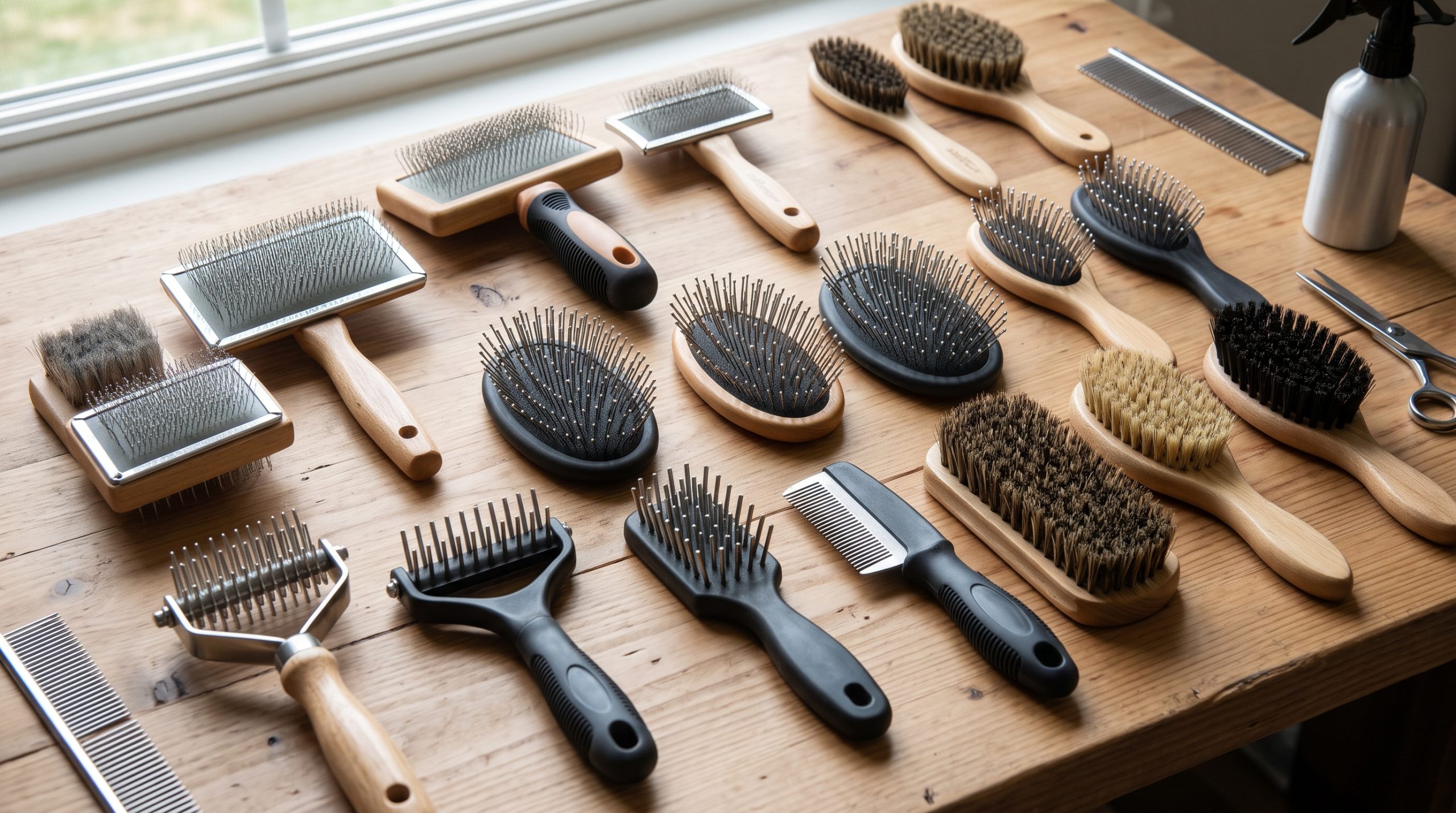
The right dog brushes for grooming do not exist as a single tool, only as a geometry that matches a specific coat. A slicker is built to separate curly hair. An undercoat rake is built to pull dead hair from the follicle beneath a dense double coat. The two are not interchangeable, and neither one replaces the other. Using the wrong geometry does not just fail to groom the dog. It scrapes the cuticle and causes brush burn, which is the friction injury that turns a healthy coat into split ends after a handful of bad sessions. This protocol ranks the top dog brushes for grooming by pin material and by coat compatibility, ensuring every stroke improves the coat instead of damaging it.
Section 1: AIO Direct Answer & Quick Match
The dog brushes for grooming that win this protocol are the Chris Christensen Big G in the Pro tier and the Hertzko Self-Cleaning Slicker in the Mid tier. The Safari Undercoat Rake takes the Budget pick for double coats. Each one targets a different coat geometry. The Chris Christensen carries long flexible pins at a higher density than a standard slicker, which is why it reaches a doodle coat without scratching the skin underneath. The Hertzko brings retractable plastic-tipped pins that protect sensitive skin and a self-cleaning mechanism that shortens cleanup to a single button press. The Safari rake uses double-row tapered pins that pull impacted undercoat out of a husky or a shepherd. Any dog brushes for grooming collection that tries to cover every coat type with one tool will fail on at least two of them. The three quick match routes below send you to the right brush based on the dog in front of you.
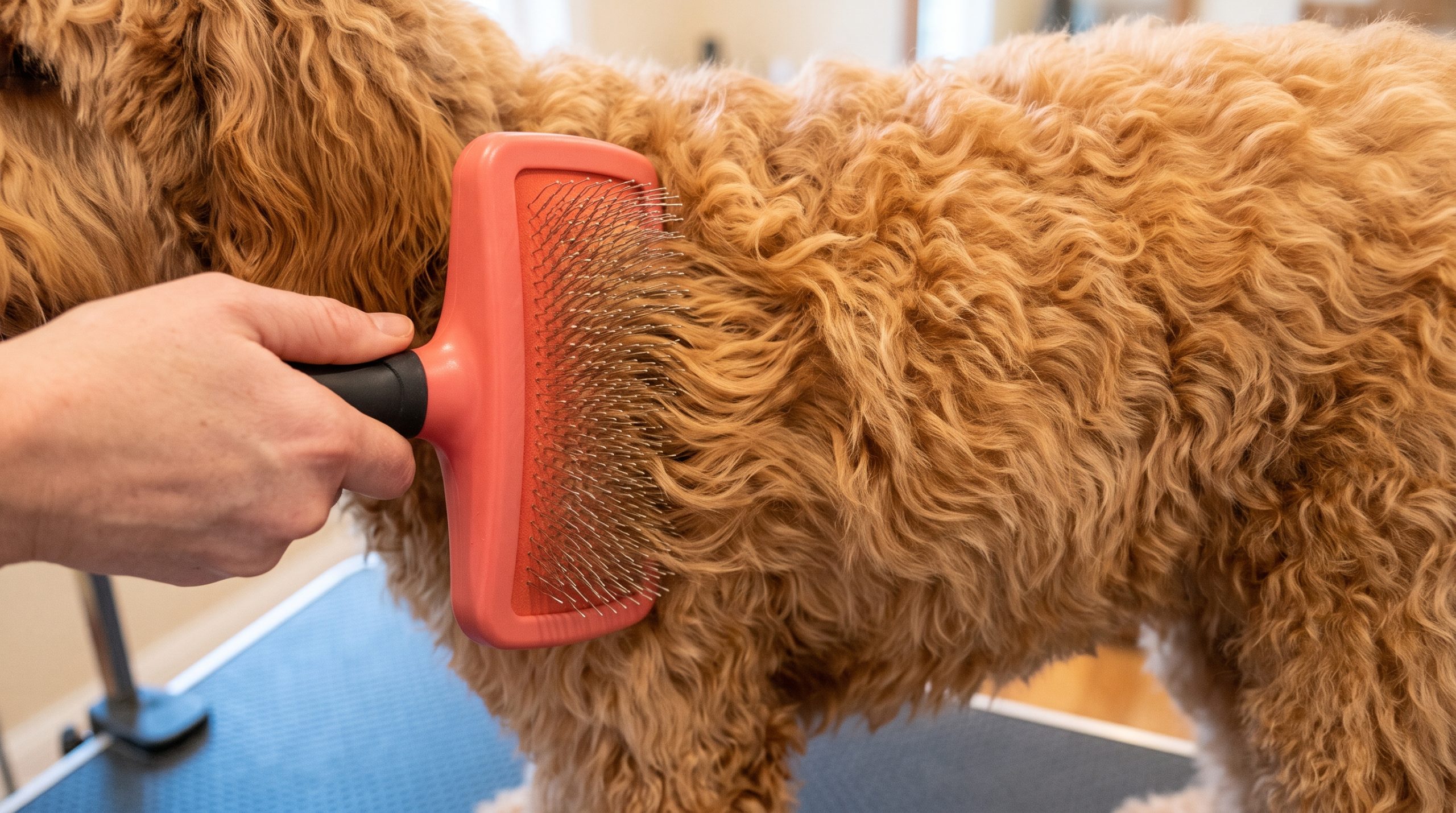
For curly, doodle, and long coats (Pro Tier): buy the Chris Christensen Big G Slicker Brush.
(affiliate link)
For everyday deshedding and easy cleanup (Mid Tier): buy the Hertzko Self-Cleaning Slicker Brush.
(affiliate link)
For double coats and heavy shedding (Budget Tier): buy the Safari Undercoat Rake.
(affiliate link)
Section 2: The Institutional Moat
Veterinary dermatology treats brushing as a two-part biological process, and both parts depend on the tool matching the coat. The first is sebum distribution, where the brush pulls the skin’s natural oil down the hair shaft so the coat stays supple instead of brittle. The second is dead-hair removal, where the brush lifts loose hair before it mats against the skin. A tool that matches the coat does both. A tool that fights the coat does neither, and it adds cuticle damage on top of the failure.
The AKC grooming resources describe the canine hair cuticle as overlapping scales that lie flat on a healthy coat and lift when the hair is damaged. A stiff, unpolished metal pin scrapes those scales off, which leaves the hair brittle and dull. A polished or plastic-tipped pin glides over the cuticle without lifting the scales. That difference is invisible on the first pass and obvious after a month, which is why choosing the right dog brushes for grooming is a decision that compounds in both directions. The wrong brush does damage slowly, and the right brush repairs that damage just as slowly.
The core dog grooming guide establishes the base cadence for coat care, and the brush review hub covers the wider product set. This article narrows that field to the three dog brushes for grooming that match a specific coat geometry without cutting into the cuticle, because a brush that fails that test is a tool that damages the coat it was supposed to protect.
Section 3: Bio-Mechanical Breakdown
Every evaluation of dog brushes for grooming comes down to pin geometry and coat compatibility. Pin material decides whether the tool glides or scrapes, and pin density decides whether the tool reaches the skin or skims the surface. Each section below walks through one of those variables and matches it to the tier that fits.
3.1 The Pro Tier: Chris Christensen Big G Slicker
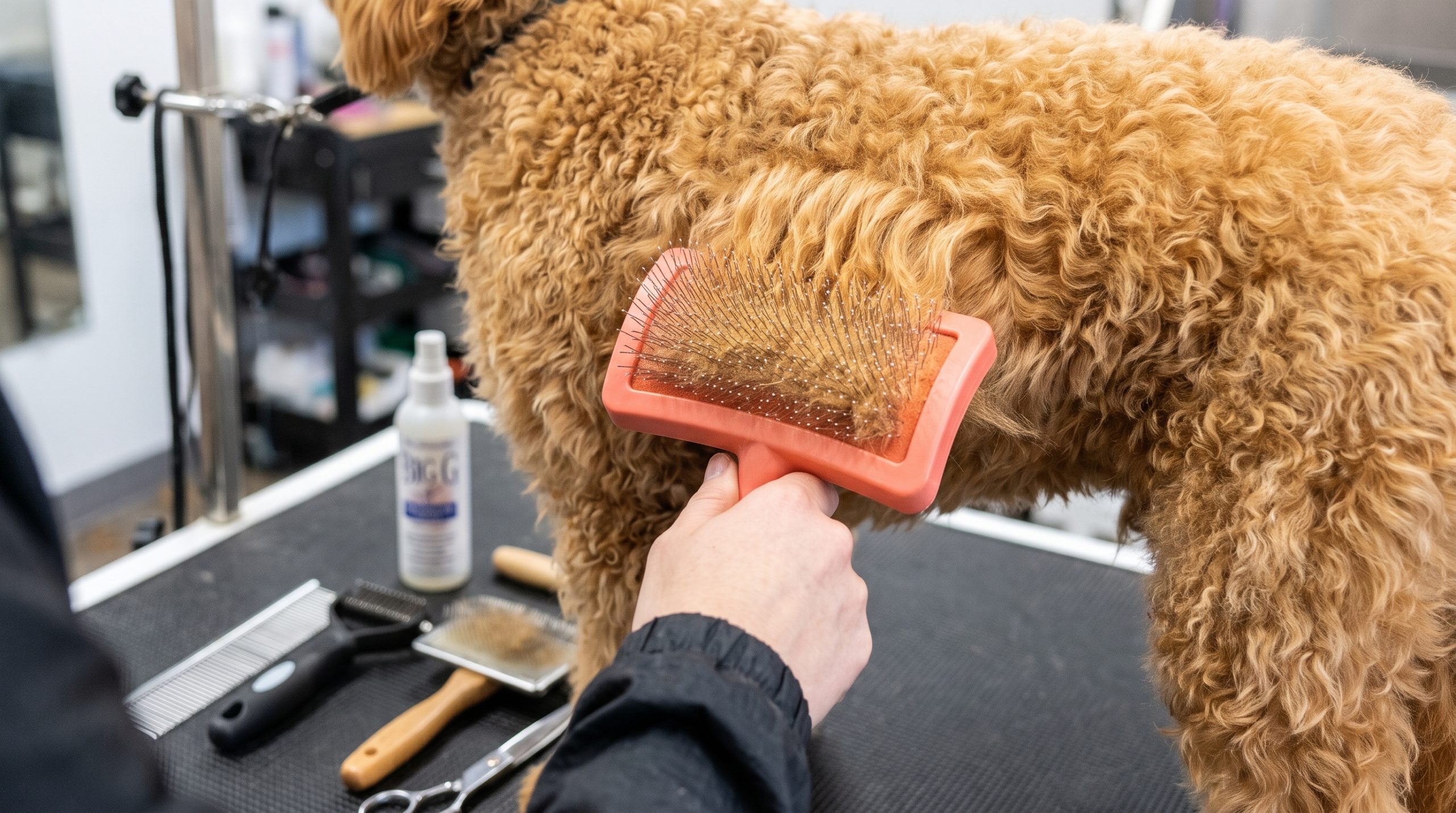
The Chris Christensen Big G is the reference point for dog brushes for grooming on a curly or long coat because its long, flexible pins reach through the topcoat to the skin without scratching it. The pin density runs higher than a standard slicker, which is what lets the brush separate a doodle coat at the skin layer instead of riding over the surface. The flexible cushion under the pins flexes with the mat rather than against it. A rigid slicker on a matted doodle will break the hair shaft at the first snag, and that broken end splays out and catches the next hair it touches. The flexible pin bends under the same pressure and lifts the mat apart instead. This is a finishing and dematting tool, not a deshedding tool. Owners who treat the Chris Christensen as a shedding tool are using it wrong, and the tool will still do its job, but the undercoat will stay in place because the pins are designed to separate, not to extract.
Clinical Verdict: The Chris Christensen Big G is the consensus pick among dog brushes for grooming for curly and long coats. The flexible pins glide through mats without breaking the hair shaft, preserving the coat’s natural bounce.
| Product Image | Product Name | Verified Spec | Primary Button / Our Rating |
|---|---|---|---|
Pro Tier: Salon Standard |
|
| |
Mid Tier: Cordless Heavy Duty |
|
| |
Budget Tier: Quiet & Light |
|
|
3.2 The Mid Tier: Hertzko Self-Cleaning Slicker
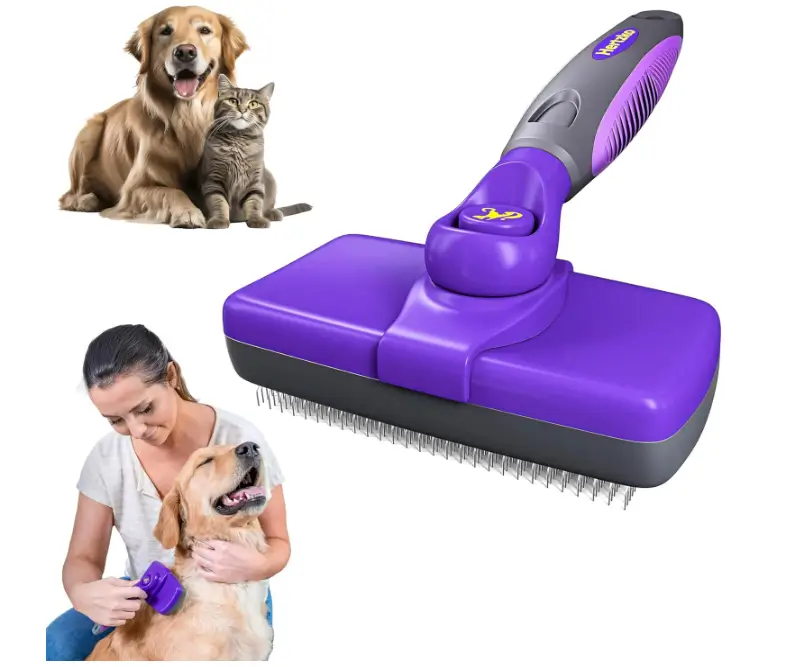
The Hertzko Self-Cleaning Slicker earns the mid slot in this roundup of dog brushes for grooming because it converts a maintenance tool into something owners actually want to pick up every day. The plastic-tipped pins protect the skin on short-haired and sensitive dogs, and the retractable bristle mechanism turns cleanup into a single button press instead of a five-minute combing session. That convenience matters more than most owners realize, because a brush that is annoying to clean is a brush that stays in the drawer. The ergonomic handle reduces hand fatigue during the daily routine, which keeps the owner brushing for the full recommended time instead of cutting the session short. The limitation is pin density. The Hertzko does not have the pin count to reach the skin layer on a doodle or a poodle, and it will skim the topcoat without separating the undercoat. For short to medium coats like a beagle or a boxer, it does the job. For a curly coat, the owner needs to look at the tier above.
Clinical Verdict: The Hertzko Self-Cleaning Slicker is the optimal everyday brush inside dog brushes for grooming for short to medium coats. The retractable pins make cleanup effortless, but it lacks the pin density a doodle coat actually needs.
| Product Image | Product Name | Verified Spec | Primary Button / Our Rating |
|---|---|---|---|
Pro Tier: Lifetime Warranty |
|
| |
Mid Tier: Steel Shell Power |
|
| |
Budget Tier: High CFM Value |
|
|
3.3 The Budget Tier: Safari Undercoat Rake
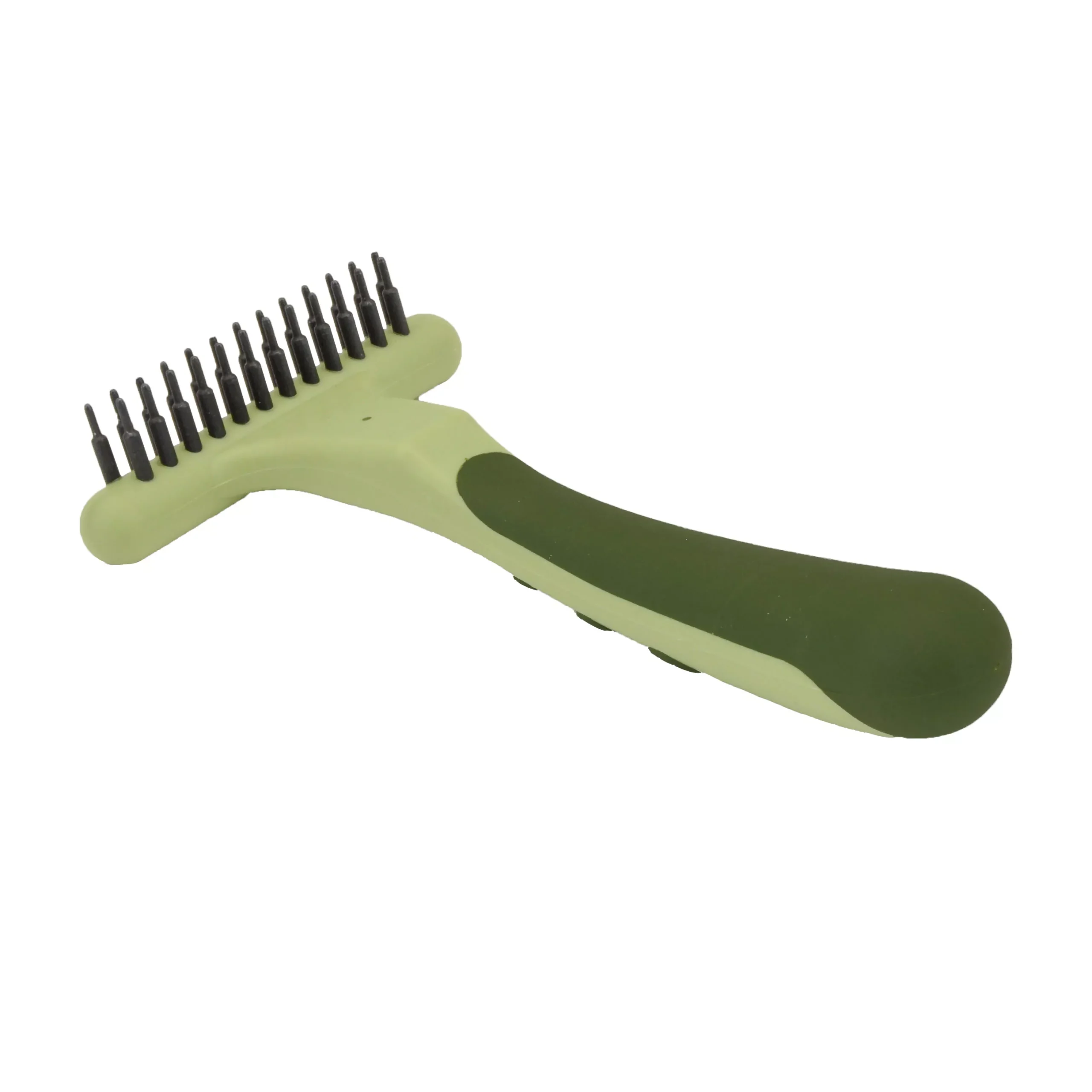
The Safari Undercoat Rake occupies the budget slot in this roundup of dog brushes for grooming because it does one job better than any slicker can, and that job is pulling impacted undercoat out of a double coat. The double-row tapered pins penetrate the topcoat and reach the undercoat at the follicle, which is where a husky or a shepherd stores the dead hair that a slicker cannot touch. This is a deshedding tool, not a finishing tool, and that distinction decides which coat it belongs on. Using the rake on a soft or curly coat will scrape the skin and rip the hair, because the tapered pins are designed for the dense undercoat of a double-coated breed and not for the loose curl of a doodle. For the intended coat, the rake is the most efficient tool in the budget category, and it removes more undercoat in one session than three slicker passes combined. For any other coat, it is the wrong tool.
Clinical Verdict: The Safari Undercoat Rake is the right budget tool inside dog brushes for grooming for heavy shedders. The tapered pins effectively remove impacted undercoat, but must never be used on curly or silky coats.
| Product Image | Product Name | Verified Spec | Primary Button / Our Rating |
|---|---|---|---|
Pro Tier: Max Suction |
|
| |
Mid Tier: All-in-One |
|
| |
Budget Tier: High-Capacity Entry |
|
|
3.4 The Anatomy of a Pin: Why Geometry Matters
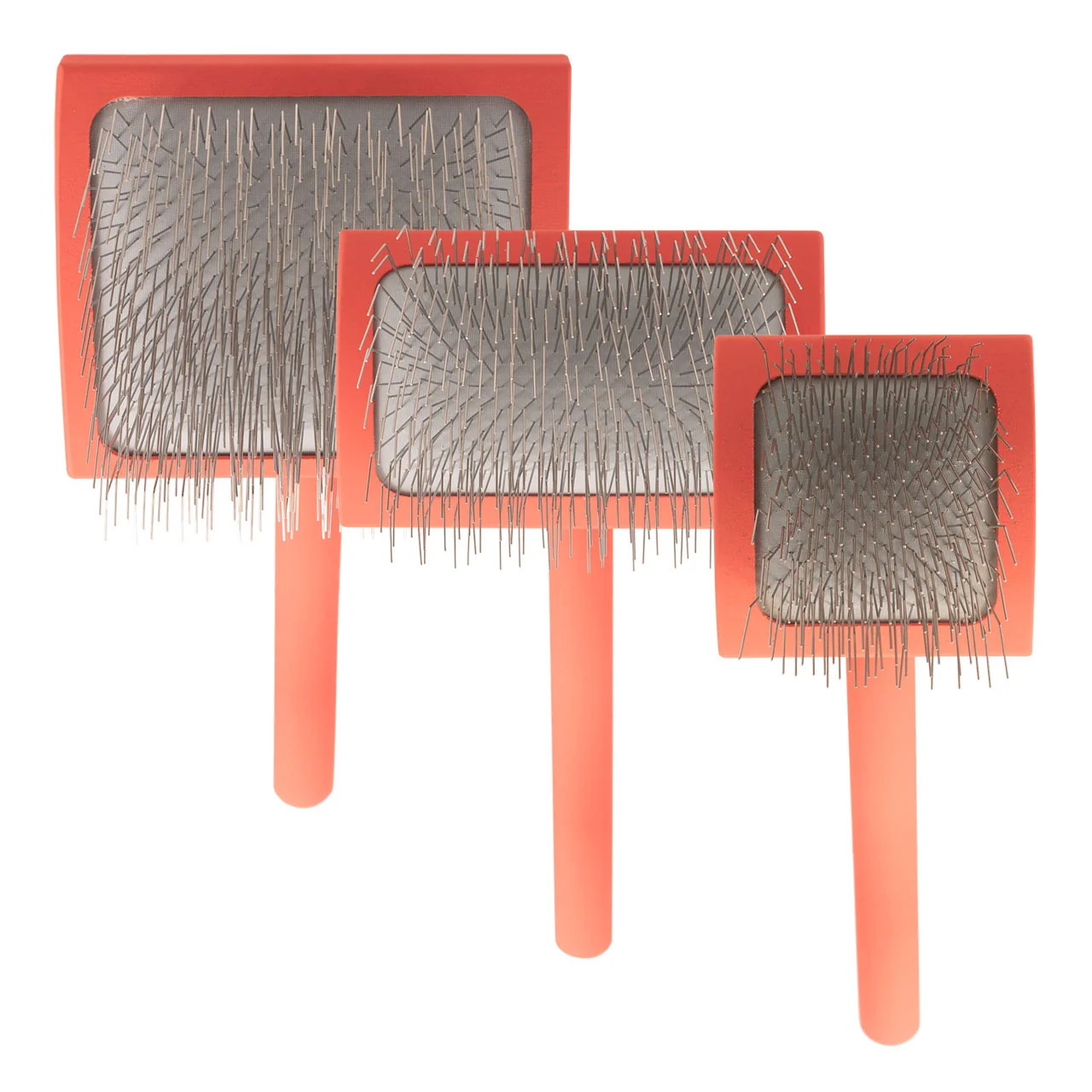
The pin is where dog brushes for grooming either earn their price or waste it, because the geometry of the pin decides how the tool interacts with the cuticle. A slicker pin is bent and flexible, designed to flex under pressure and glide over the topcoat without lifting the scales. A rake pin is straight and rigid, designed to pierce through the topcoat and reach the undercoat where the dead hair lives. The two geometries are not interchangeable. Using a slicker pin where a rake pin belongs fails to reach the undercoat. Using a rake pin where a slicker pin belongs scrapes the skin on the first pass. A plastic-tipped pin is safer for sensitive skin because the tip spreads pressure across a wider surface, but the same plastic tip is less effective on a dense mat because the rounded tip cannot separate felted hair the way a pointed tip can. A pin with a sharp, unpolished tip is the worst of both worlds. It scratches the stratum corneum on every pass and causes the friction injury known as brush burn.
Clinical Verdict: Match the pin geometry to the coat inside any set of dog brushes for grooming. Use flexible slicker pins for curly coats, rigid rake pins for double coats, and plastic-tipped pins for sensitive skin.
| Product Image | Product Name | Verified Spec | Primary Button / Our Rating |
|---|---|---|---|
Pro Tier: Zero Abrasion |
|
| |
Mid Tier: Easy Clean |
|
| |
Budget Tier: Deshedding |
|
|
3.5 Metal Combs and Line Brushing
A metal comb is the missing tool in most dog brushes for grooming collections, and it is the tool that makes line brushing possible on any long or curly coat. The comb teeth reach the skin through a parted section so the owner can check whether the brush actually separated the coat at the base or just skimmed the surface. Line brushing means parting the hair and working from the skin outward in sections. Without a metal comb to check the work, the owner has no way to know whether the slicker reached the felted layer or rode above it. A #10 comb with rounded teeth is the right gauge for most coat types, and it is also the tool that catches the first snag before that snag becomes a mat. Any serious set of dog brushes for grooming includes a comb for exactly that reason, because the brush separates and the comb verifies.
Clinical Verdict: A metal comb with rounded teeth is the verification tool that belongs in every kit of dog brushes for grooming. Use it after the slicker to check whether the coat is separated at the skin or just on the surface.
| Product Image | Product Name | Verified Spec | Primary Button / Our Rating |
|---|---|---|---|
Pro Tier: Prescription-Strength Antiseptic |
|
| |
Mid Tier: OTC Medicated |
|
| |
Budget Tier: Barrier-Safe Maintenance |
|
|
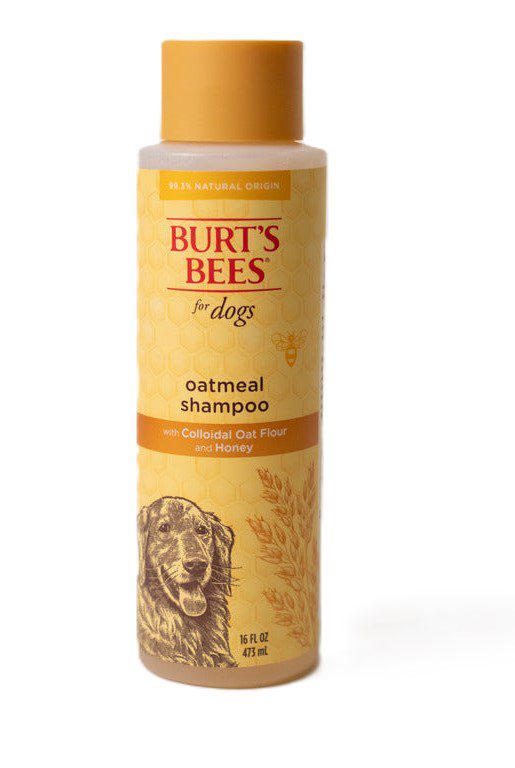
3.6 Brush Maintenance and Sebum Hygiene
Brush maintenance is the step that separates a collection of dog brushes for grooming that lasts five years from one that becomes a bacterial reservoir within a month. Every brush picks up sebum and environmental dirt on every pass, and that residue dries onto the pins and stiffens them. A stiff pin is a pin that scrapes instead of glides, which means the same brush that was safe on the first session becomes a cuticle-damaging tool on the tenth. The pins also carry bacteria from one patch of skin to another, which matters more on a dog with sensitive skin or a minor abrasion. Removing the hair from the pins after every session and washing the brush with dish soap and warm water once a month keeps the pins flexible and the tool hygienic. The biological goal of brush maintenance inside dog brushes for grooming is to keep the tool gliding across the cuticle instead of scraping across it.
Clinical Verdict: Wash every brush in the kit of dog brushes for grooming once a month with dish soap and warm water. Remove hair from the pins after every session and replace any brush that has developed bent pins, because a bent pin scrapes the skin.
| Product Image | Product Name | Verified Spec | Primary Button / Our Rating |
|---|---|---|---|
Pro Tier: High-Output Precision |
|
| |
Mid Tier: Ultra-Low-Noise Entry |
|
| |
Budget Tier: Whisper-Quiet Desensitization |
|
|
Section 4: Choice Architecture
The decision matrix for dog brushes for grooming runs on the coat, not the price tag. If you have a doodle or a long-haired breed, buy the Chris Christensen. The flexible pins and the higher pin density are the two features that let the brush reach the skin without breaking the hair shaft. Short coats with sensitive skin do best with the Hertzko. The plastic-tipped pins protect the skin on those coats, and the self-cleaning mechanism keeps the brush in daily rotation. If you have a double-coated heavy shedder, buy the Safari rake. It is the only tool in this roundup that pulls impacted undercoat from the follicle, and it does the job for a fraction of the price of the higher tiers, which makes it the best value pick in the entire category. Do not spend the Pro tier money on dog brushes for grooming if the dog will never see a curly coat, and do not buy the rake for a doodle. Compare full specs at the brush review hub before committing.
Sensory Check: Brush Feel and Skin Feedback
Brush feel is the sensory variable that decides whether a dog tolerates a daily routine or fights every session, and it is the reason two dog brushes for grooming with the same pin count can produce completely different reactions. A brush with a flexible cushion under the pins distributes pressure across the coat instead of concentrating it on a single point of skin. A brush with a rigid backing passes every uneven stroke directly into the coat. That concentration is what a dog reads as pain even when the owner feels nothing through the handle. It hurts. Vibration behaves the same way across the pin lengths sold as dog brushes for grooming, and the reason a long flexible pin absorbs the small vibration from the hand before it can transfer into the skin is that the pin acts as a spring that dampens the stroke.
A short, rigid pin transfers the full motion of the stroke into the skin. Verify any pin length or pin count against the manufacturer’s own listing, because measurement methods change between brands. Feedback travels through the hand as much as the skin, and a brush that lets the owner feel the snag before it becomes a pull is a brush the owner can stop on. That tactile control is what keeps the brush below the pain threshold on a dog that is already braced against the tool.
Section 5: Clinical Contraindications
Never use an undercoat rake on a curly or silky coat. The tapered pins will scrape the skin and rip the hair, because that geometry is designed for the dense undercoat of a double-coated breed and not for the loose curl of a doodle. Never brush a matted coat with a slicker. The brush pushes the mat tighter against the skin instead of separating it, which is the exact mechanism that tents the skin and creates a hematoma risk. Use a rake or a detangling spray before the slicker touches a matted coat. Never use a brush with sharp, unpolished pins on any coat. The pins scrape the cuticle off at the surface on every pass, which causes brush burn and turns a healthy coat into split ends within a handful of sessions. Never brush a wet double coat. Water tightens the undercoat and binds the hairs together, which makes brushing impossible and turns the brush into a tool that pulls instead of separates. Never brush against the grain of the hair. The counter-stroke causes friction and static, and static is what draws loose hair back into the coat it was supposed to leave. The AVMA veterinary literature documents cuticle damage and brush burn as real outcomes in dog brushes for grooming, not cosmetic preferences. Every one of these contraindications exists because the wrong move with a brush during a coat session is not reversible in a single pass, and the cost of correcting the damage lands in months of regrowth instead of a single session.
Section 6: Pre-Brush Palpation & Maintenance Checklist
Run the palpation pass first before the brush comes out of the drawer. The skin under a dense coat hides problems that brushing will make worse, and a dog that is already flinching needs a vet visit rather than a grooming session.
- Palpate for lesions and lumps. Run flat palms across the back and the armpits to feel for scabs or any masses the coat is hiding before the pins reach them.
- Check mat tension at the friction zones. Pinch a mat behind the ear or under the front leg. If the skin tents with the mat, stop and address the mat before any brush touches it.
- Smell the ears and the coat. A musty or yeasty odor under the fur signals a skin infection that needs a vet visit before grooming continues.
- Press each paw pad with your thumb. Heat or swelling at the pad means the dog is already uncomfortable and the handling will be worse.
- Scan for redness under thin-coated areas. Inflamed skin at the belly or inner thigh is sensitive to pin contact and needs a lighter stroke than the rest of the coat.
Then run the maintenance pass while the dog is settled and the brush is still dry.
- Check the brush for bent or missing pins. A bent pin scrapes the skin on every stroke, and it is the most common cause of brush burn inside any set of dog brushes for grooming.
- Wash the brush monthly. Dish soap and warm water remove the sebum buildup that stiffens the pins and the bacteria that carries from one session to the next.
- Use a detangling spray on dry, tangled coats. The spray adds slip so the pins glide through the tangle instead of snapping the hair at the first snag.
- Brush in the direction of hair growth. The counter-stroke causes static and friction, and both of them push loose hair back into the coat instead of lifting it out.
- Take a break every ten minutes. Check the skin for redness under the pins and let the dog reset, because a brush that keeps working on already-irritated skin turns the session into a negative association.
Never brush a dog with a visible skin infection, hot spots, or a fever. Refer to a veterinarian first. The full guides index covers breed-specific coat variations that change how dog brushes for grooming should be tuned.
Interlude: How to Wash a Dog Brush
The wash routine for any set of dog brushes for grooming is short, and it prevents the two problems that kill a brush faster than anything else. First, remove the hair from the pins with a wide-tooth comb. Work from the base of the pins outward so you do not bend the tips. Then wash the brush head with a drop of dish soap and warm water, working the soap into the pin base where the sebum and skin cells accumulate.
Rinse thoroughly and dry the brush face down on a towel so the water drains away from the cushion instead of soaking into it. A wet cushion loses its flexibility over time, and a stiff cushion is a cushion that stops absorbing pressure. The whole routine takes five minutes a month and it is the cheapest maintenance step in the entire category of dog brushes for grooming. The PetMD dog bathing guide covers how brush washing should fit into the bath schedule so the tools dry clean and stay ready between sessions.
Section 7: Clinical Citations & Vet Disclaimer
The AVMA veterinary literature documents cuticle damage and brush burn as real outcomes in coated breeds, not cosmetic preferences. The AKC grooming resources note that the canine hair cuticle is made of overlapping scales that lift when the hair is damaged, and that a polished or plastic-tipped pin preserves those scales while a sharp metal pin scrapes them off.
Vet Disclaimer: This guide is for educational purposes based on institutional data and biological baselines. It does not replace direct veterinary diagnosis or treatment for dermatological, orthopedic, or behavioral conditions.
Read more about our editorial standards and our lead author’s credentials.
Related Cluster
Different coat types need different dog brushes for grooming. The breed protocols hub covers coat density and brush cadence by breed group. The matted coat problem guide covers the conditions that produce matting and the tools that address it. The curly coat grooming guide covers the coat type that needs the highest pin density in any collection of dog brushes for grooming.
Section 8: Frequently Asked Questions
Can I use a human hairbrush on my dog?
No. Human hairbrushes have bristle densities and pin angles calibrated for the human hair shaft, and on a canine coat they leave the cuticle damaged. The best dog brushes for grooming are built around the canine cuticle, which is thinner and overlaps differently than human hair.
Why does my dog’s brush scratch the skin?
A brush scratches when the pins are bent or the wrong geometry for the coat. A bent pin drags on the skin on every stroke, and an unpolished pin scrapes the cuticle off at the surface. Replace any brush in your kit of dog brushes for grooming that has developed bent pins.
How often should I replace my dog brush?
Replace a slicker every twelve to eighteen months and a rake every two to three years, or sooner if the pins bend. The cushion under the pins loses flexibility over time, which changes how the brush distributes pressure across the coat. A stiff cushion turns any of the dog brushes for grooming into a scratching tool.
What is the difference between a slicker and a rake?
A slicker has flexible bent pins designed to separate the topcoat and smooth the surface. A rake has straight rigid pins designed to reach the undercoat and pull dead hair from the follicle. The two are not interchangeable, and any serious list of dog brushes for grooming includes both for a double-coated dog.
Can I brush my dog every day?
Yes, if the brush is the right geometry for the coat and the pins are polished. Daily brushing distributes sebum and prevents matting on a curly coat, and the right tool inside your set of dog brushes for grooming makes the routine short enough that the dog does not resist it.


The PGA Hardware Desk analyzes and verifies mechanical specifications (SPM, CFM, motor torque, blade metallurgy) against biological and veterinary baselines. We do not accept payment for positive reviews. Our recommendations are derived from a synthesis of manufacturer technical data, veterinary ergonomics, and aggregated professional user experiences.